AI Receptionist for Law Firms: How to Choose One That Won't Create Liability

Albert Quintero • June 11, 2026

An AI receptionist can answer your law firm's phone around the clock, qualify the caller, and book the consult while you sleep. That part is real, and it works.

The catch is that not every AI receptionist is safe for a law firm to put on the phone. The wrong kind will quote a fee you never set, or promise help with a case you don't take. For a law firm, a confident wrong answer isn't a bad review. It's exposure.

Here is the short version. There are two kinds of AI receptionist, and the difference decides everything. A prompt-based agent improvises and can make things up. A flow-based agent can only ever say what's true, because it runs on a fixed path instead of a personality.

This guide breaks down how each one works, why most firms should only trust the flow-based kind, and the simple math behind why it pays for itself fast.

Prompt-Based vs Flow-Based: The Difference That Decides Everything

Picture a new hire on day one. You're slammed, so you hand them the phone and say "act like you work here, good luck." They want to be helpful. So when a caller asks something they don't know, they don't say "I'm not sure." They wing it. A confident person with no script will tell a caller almost anything.

That is a prompt-based agent . You give the AI a personality and a page of instructions, then turn it loose on live callers.

Now picture that same hire, but before they touch the phone you hand them a laminated card with three boxes to check. Get the caller's name. Confirm it's a case you actually handle. Confirm they're in your area. Then book them. They can't freelance, because the card won't let them.

That is a flow-based agent . Same AI underneath. Completely different result. One can improvise its way into a problem. The other can only do what the path allows.

Why a Prompt-Based AI Receptionist Makes Things Up

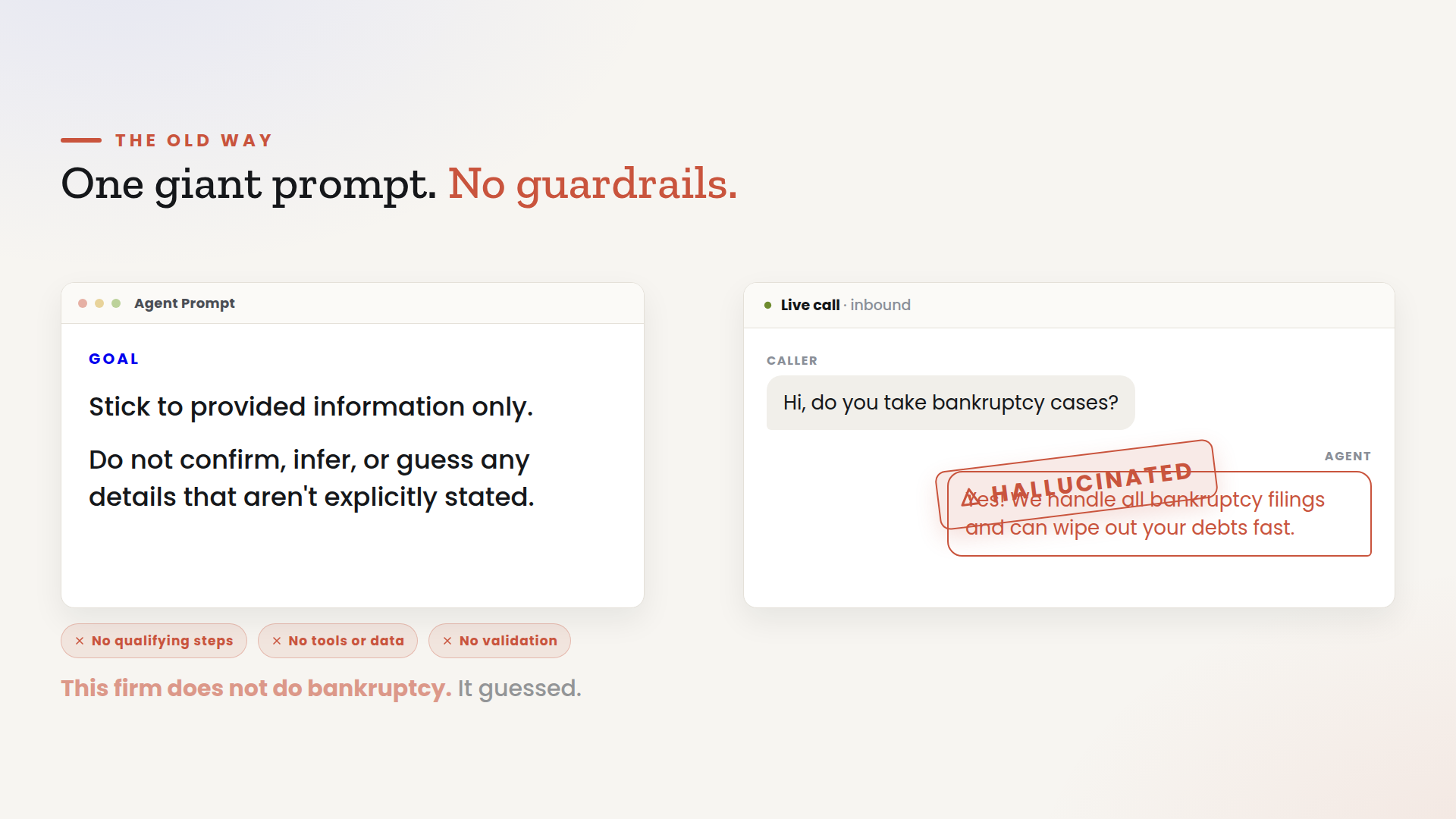
The risky version is basically a wall of instructions. And here is the part that catches most people off guard: the people who build these are usually trying to be careful. The prompt says things like "stick to provided information only" and "do not guess any details that are not stated."

It sounds bulletproof. It isn't. Every line in there is a request. It's asking the model to behave.

The problem is what the model is built to do. An AI like this isn't a truth engine. It's a prediction engine, designed to produce fluent, plausible-sounding text. So the moment a caller asks something the prompt didn't cover, it does exactly what it was built to do. It fills the gap with something that sounds right.

This isn't a rare glitch. Independent testing that scores how often these models fabricate shows that even the best ones invent details often enough to matter, and many do it far more. A "low" rate sounds fine until you remember the thing is quoting your fees and telling callers whether you can take their case.

Two real examples make it concrete:

  • The airline that got held liable. In early 2024, a tribunal ruled against an airline after its website chatbot invented a refund policy and told a customer he could claim it. The airline argued the bot was responsible for its own words. The tribunal disagreed and ordered the airline to pay.
  • The one-dollar SUV. In December 2023, a caller talked a car dealership's chatbot into agreeing to sell a brand-new SUV for one dollar, and got it to call the offer binding.

The lesson for any firm owner: you own whatever your bot says.

In most businesses, that's an embarrassing screenshot. In a law firm, it's risk. So how do you build one that physically can't wing it?

How a Flow-Based AI Receptionist Is Built for a Law Firm

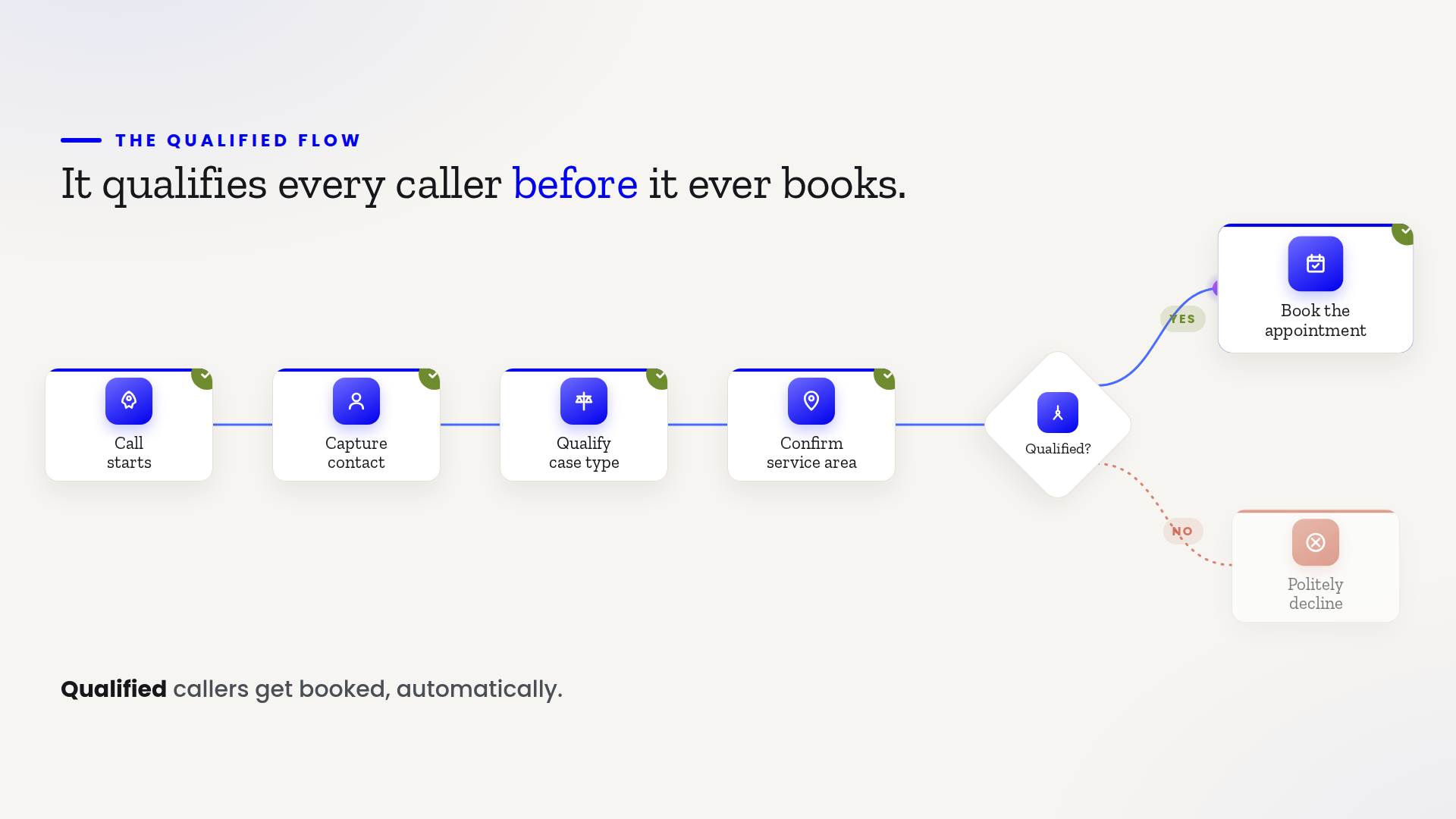
You stop asking the AI to behave, and you build it so misbehaving isn't possible. Instead of one big prompt and a prayer, the conversation is broken into steps, and the agent can only move one approved step at a time. At each step it can only say what you've handed it. There's no open room to wander into, so there's nothing to invent.

Here's a real flow we built for a firm that handles criminal defense and personal injury, step by step.

Step 1: Capture the caller's name

The first thing it does is get the caller's first and last name. Simple. Now it knows who it's talking to.

Step 2: Run the case-type check

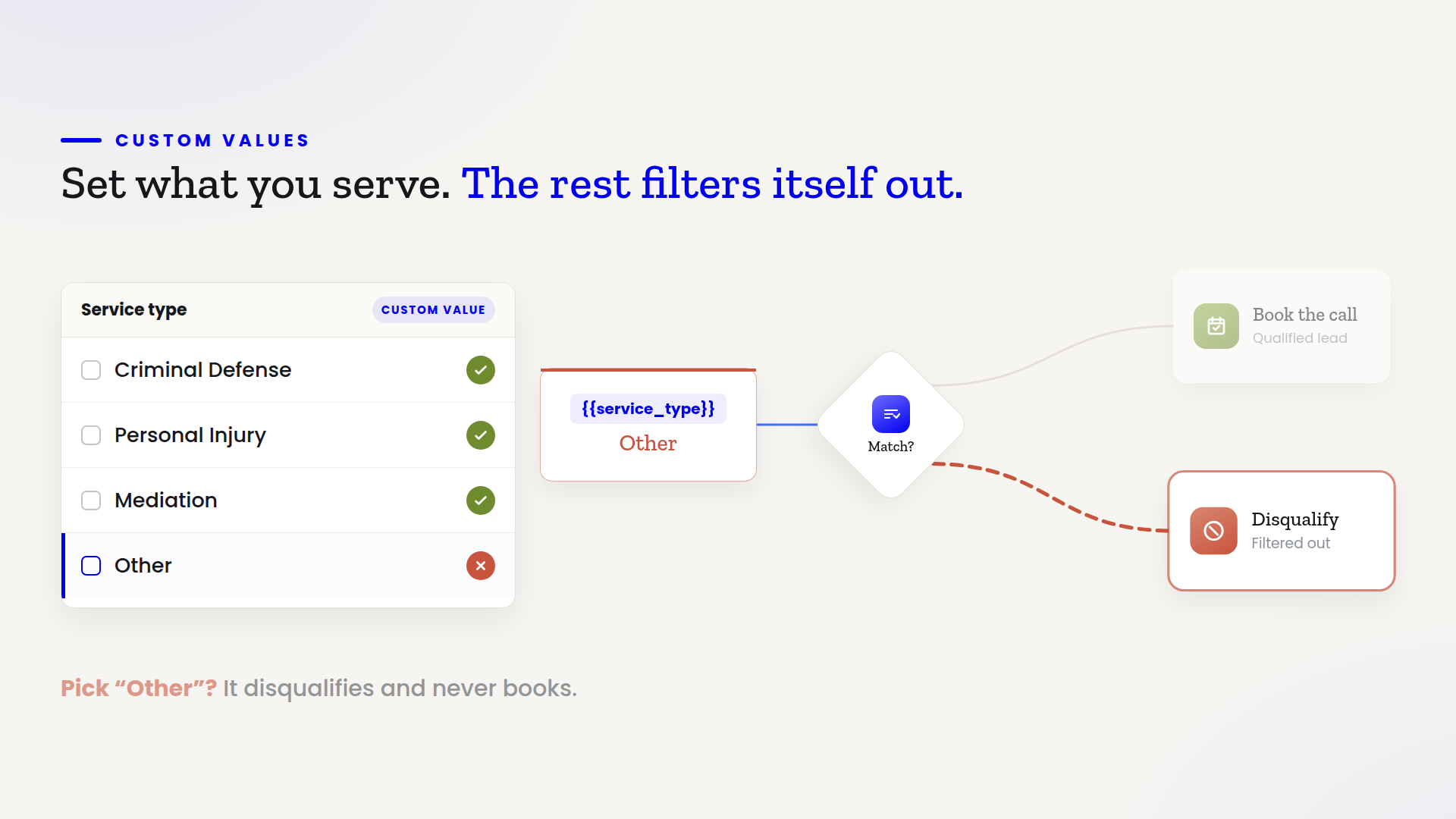
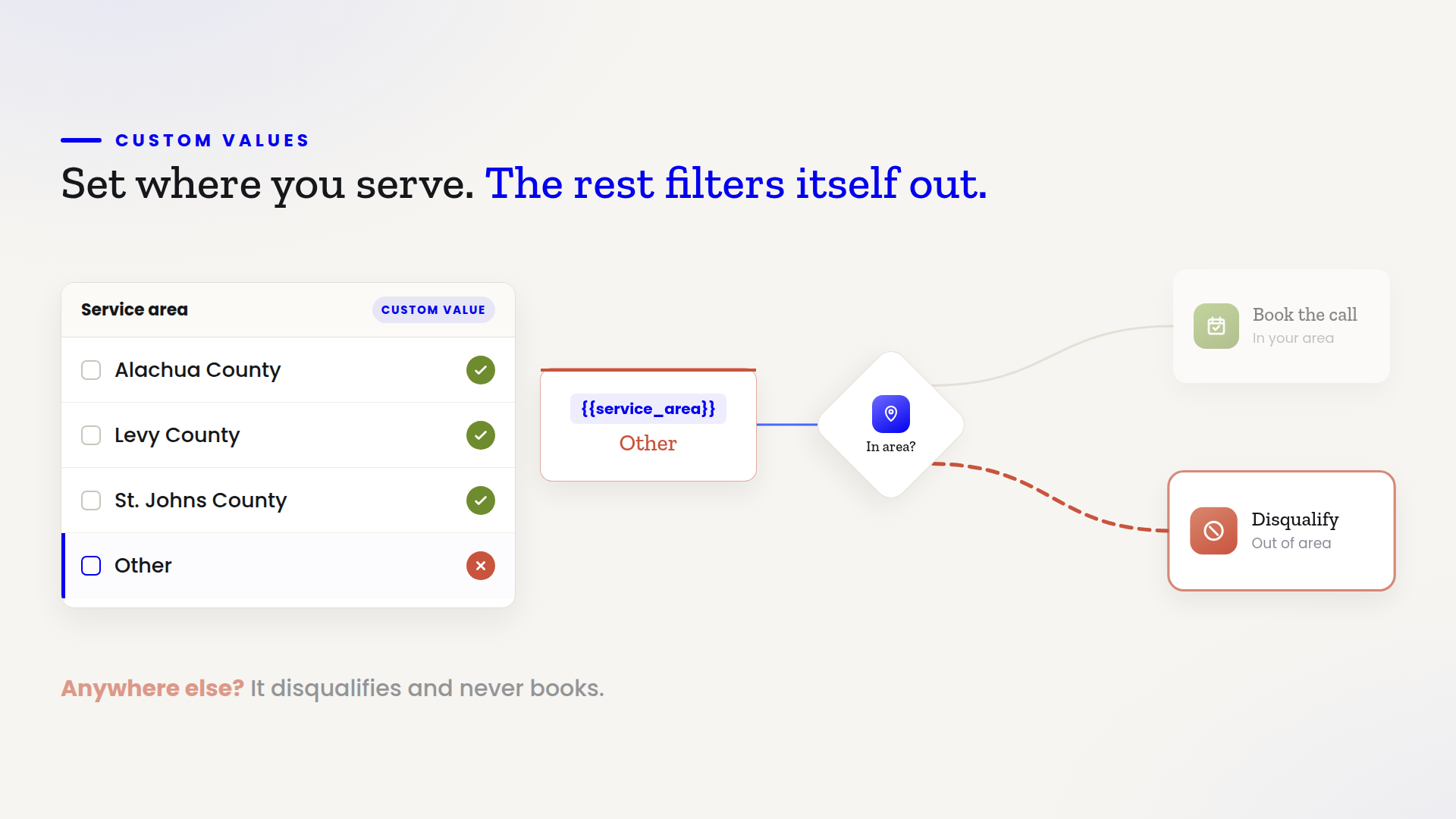
Next it asks what kind of case they have, then hits a locked check. The case types are a fixed list, and the agent can only recognize what's on it.

  • If the caller needs a case type the firm handles, it passes them forward.
  • If the case falls under "Other," something the firm doesn't take, the agent does not get creative. It does not say "sure, we can probably help." It routes to a polite "sorry, we can't help" and ends the call cleanly.

Step 3: Run the service-area check

Then it confirms the incident location and checks it against the counties the firm actually covers.

  • If the caller is inside the service area, they continue.
  • If they're outside it, the agent sends them to the same polite dead end. It cannot claim a county the firm doesn't serve, because there is no path for it to do that.

Step 4: Book the consult

Only after a caller clears both gates, the right case and the right area, does the agent collect their email and phone, then drop them straight onto the calendar.

Step back and look at what happened. The agent never once got the chance to make anything up. There's no rule telling it to be honest. There's a track that makes lying impossible, with literal "can't help" exits where a prompt-based bot would have invented a yes.

There's a hidden bonus too. A flow-based agent answers identically on call number one and call number one thousand. No mood, no drift, no bad day. The same correct conversation, every single time.

Why This Saves Law Firms Money

It's safer. But does building it this carefully actually move real money? It does, and the math leans hard in your favor.

The phone is still the front door. When someone has a legal problem, they don't fill out a form and wait. They call. And if you don't pick up, they usually don't leave a voicemail. They dial the next firm. A widely cited study from 411 Locals found that 62% of calls to small businesses go unanswered. Every one of those is a client who already found you and you still lost.

Speed decides who wins. A well-known response-time study from MIT and Harvard Business Review found that answering a lead within five minutes instead of thirty makes you roughly 100 times more likely to actually reach them. A flow-based agent answers in seconds, every time, day or night.

One case dwarfs the cost. A single personal injury case can be worth thousands, sometimes tens of thousands of dollars. A criminal defense retainer isn't far behind. So missing one qualified caller can cost more than the entire system costs in a year. Compare that to a human receptionist at about $37,230 a year (BLS, May 2024) who covers roughly 40 hours a week and goes home at five.

And here's where it really stings, because of when these calls come in. People don't get arrested at 2pm on a Tuesday. Accidents don't happen on a schedule. In criminal defense and personal injury, the calls land at night, on weekends, in a panic, and the first firm to answer usually wins the retainer. Stack up a year of the calls you used to miss, and the savings stop sounding like a headline.

From Google Click to Booked Consult

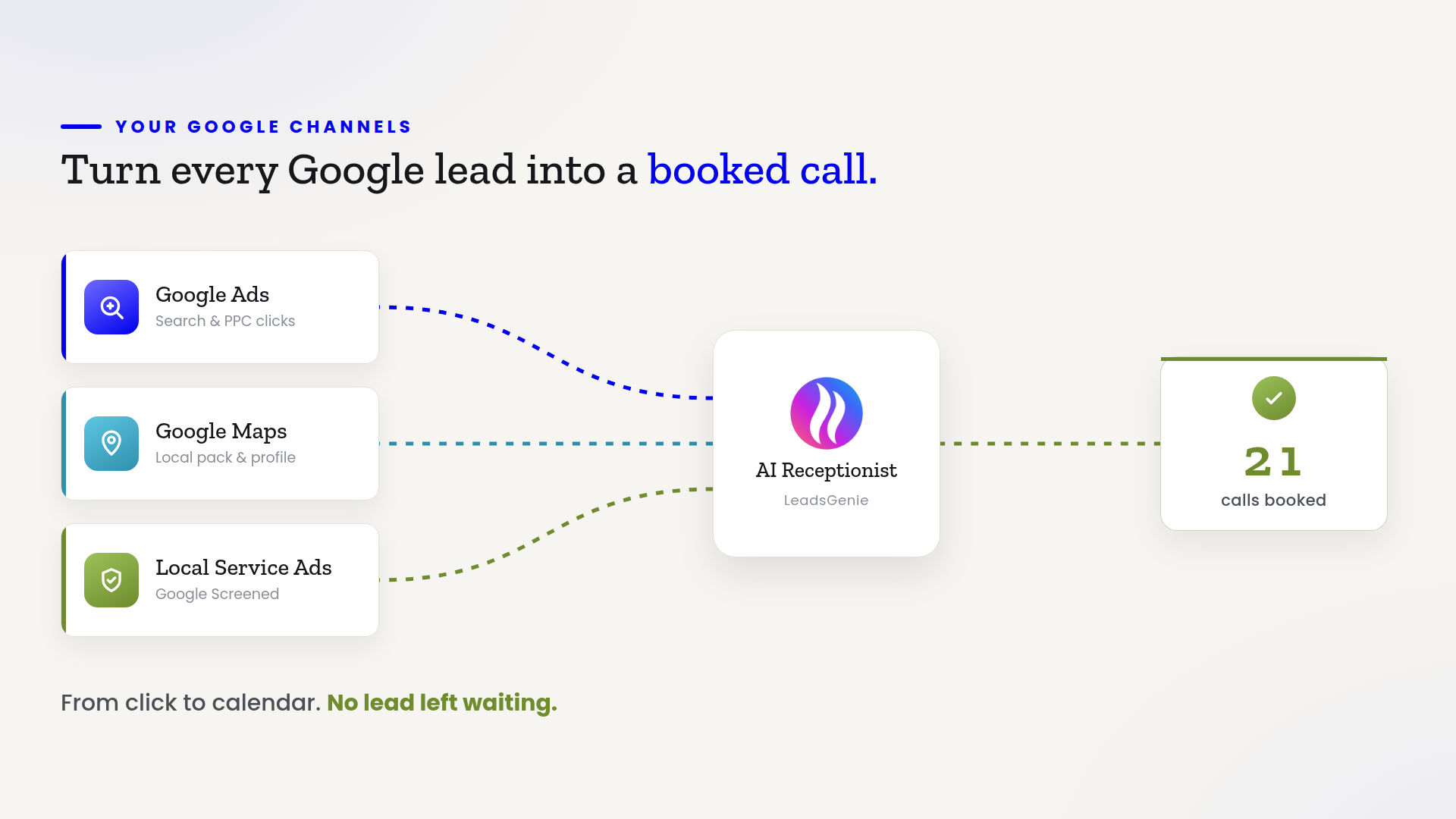
This is where lead generation and intake finally connect. If you're already paying for Google Ads, ranking in Google Maps, or running Local Service Ads, every one of those clicks turns into a phone call. The AI receptionist is what catches that call and turns it into a booking, instead of letting it ring out after hours.

Getting the phone to ring is only half the job. If the call doesn't get answered and booked, the lead is gone. Pairing your lead generation with an agent that actually catches and converts is what closes the gap.

Is an AI Receptionist Ethical for a Law Firm?

Short answer: yes, when it's scoped correctly. This is the safe way to run one.

  • The agent discloses it isn't a lawyer.
  • It gives zero legal advice. It stays locked inside intake and scheduling, nowhere near the unauthorized practice of law.
  • You keep full human oversight the whole way through.

A flow-based build supports all of this by design, because it can only state verified, pre-approved information. The ABA has also weighed in on lawyers using generative AI (Formal Opinion 512, 2024), reinforcing that accuracy and supervision are professional obligations, not nice-to-haves. An agent that can only say what's true is the compliant choice. Remember the rule from the top: you own what your bot says, so you build one that can only say what's true.

What to Look for in an AI Receptionist for Your Law Firm

If you're shopping for one, use this as your checklist:

  1. Flow-based, not prompt-based. Ask vendors directly whether the agent follows a fixed path or runs on a single prompt. If they can't answer, that's your answer.
  2. Locked variables for your services and areas. It should only recognize the exact case types and counties you serve, with clear "we can't help" exits for everything else.
  3. A booking step at the end. Qualifying a caller is worthless if it can't get them on the calendar.
  4. Clear AI disclosure and an intake-only scope. No legal advice, ever.
  5. 24/7 coverage. The whole point is catching the nights-and-weekends calls a human can't.

Frequently Asked Questions

  • Can an AI really answer calls for a law firm?

    Yes. A flow-based AI receptionist can answer the phone, identify the caller, confirm the case type and location, and book the consultation, all without a human. The key is that it only states information you've pre-approved.

  • What's the difference between a flow-based and a prompt-based AI agent?

    A prompt-based agent runs on a personality plus instructions and can improvise, which means it can invent answers. A flow-based agent follows a fixed, step-by-step path and can only say what it's been given at each step, so it can't make things up.

  • Is an AI receptionist safe for criminal defense and personal injury intake?

    It's well suited to both, because those calls are time-sensitive and often come after hours. A properly scoped agent qualifies the case and books the consult instantly, while disclosing it isn't a lawyer and giving no legal advice.

  • How much does an AI receptionist cost compared to a human?

    A human receptionist runs around $37,230 a year (BLS, May 2024) for about 40 hours a week. An AI receptionist covers nights and weekends too, and for most firms a single recovered case can cover the cost for the year.

  • Will an AI receptionist quote the wrong fee or promise the wrong service?

    A prompt-based one can. A flow-based one is built so it physically can't, because its services, fees, and service areas are locked variables with no path to invent anything outside them.

The Bottom Line

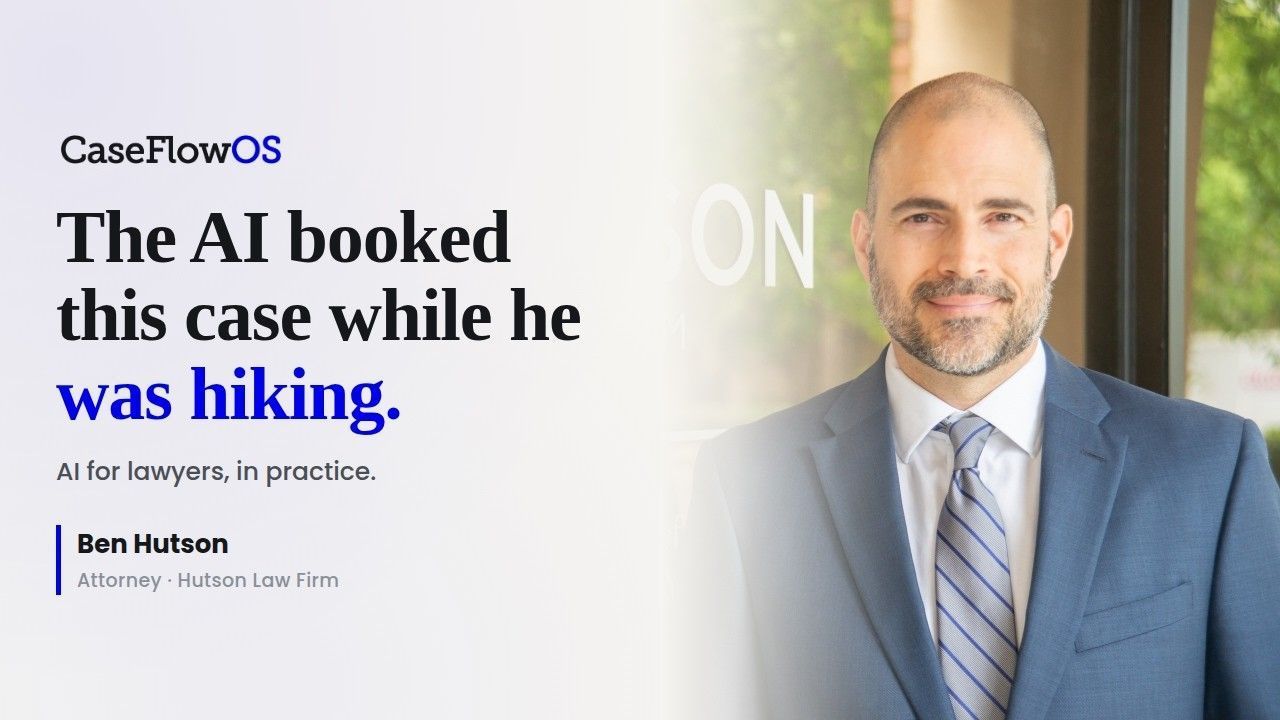
If you take one thing from this: the safe AI receptionist for a law firm is the one that can only say what's true. That's a flow-based agent, not a prompt-based one. Watch the full walkthrough above to see exactly how the flow is built, screen by screen, then take a look at which kind is currently answering your phone. If you want help putting one on your firm's line, that's exactly what we build.

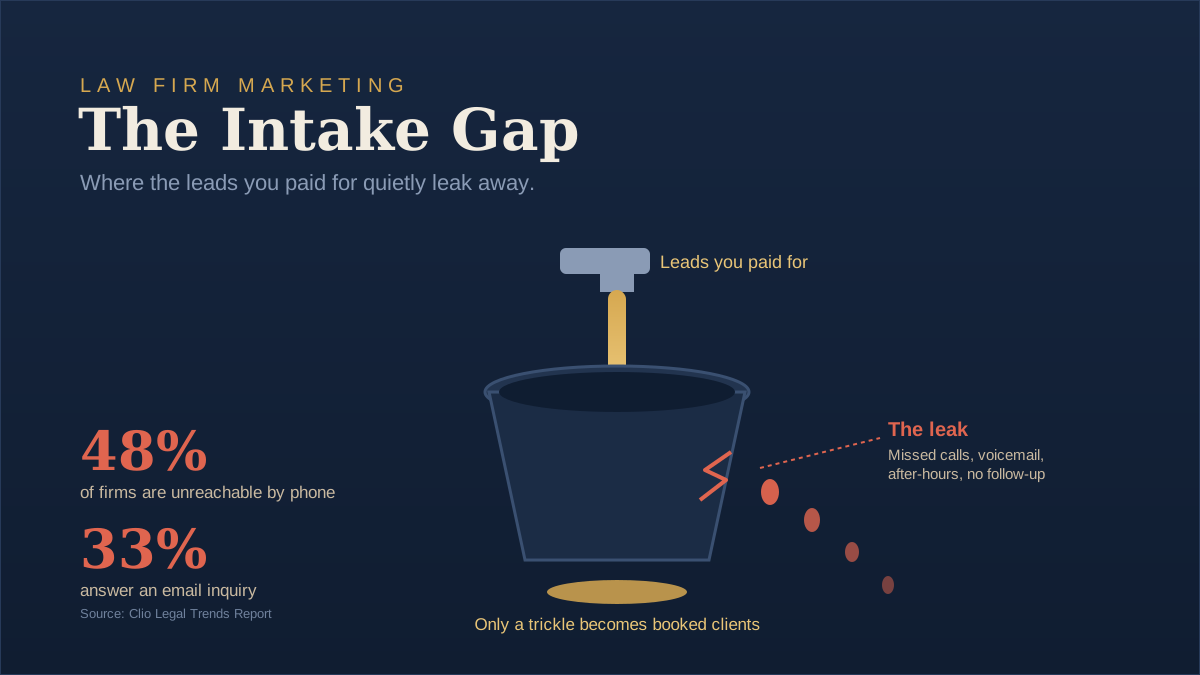
Law firm marketing funnel showing paid leads leaking out through the intake gap
By Albert Quintero June 6, 2026
Most law firm marketing fails at intake, not leads. See how the Intake Gap quietly loses clients and the simple AI fix that catches every call.
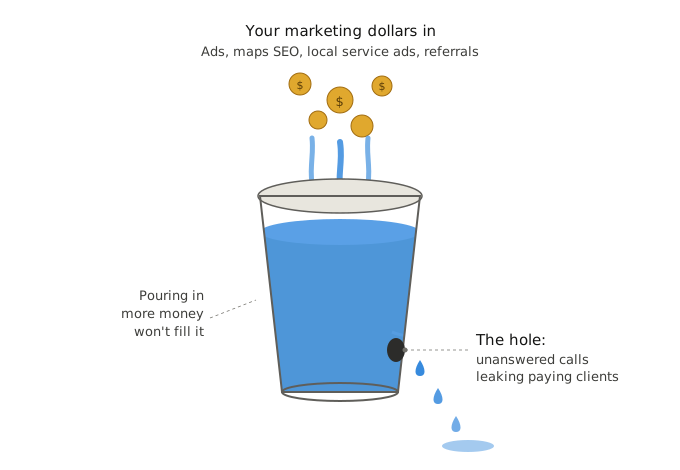
Diagram of how to stop missing calls in a business with an after-hours AI receptionist workflow
IMAG
By Albert Quintero May 31, 2026
Stop missing calls in your business and losing paying clients. See how AI receptionists answer every call 24/7 and book leads automatically.