Google Business Profile Optimization: The 3 Moves That Actually Rank You

Albert Quintero • July 26, 2026

Your profile is filled out. Hours, categories, description, website link, all of it. And you are still sitting below competitors in the Map Pack.

Here is the short answer. Most Google Business Profile optimization advice online is either outdated or has been formally tested and disproven. Geotagging your photos does nothing. Stuffing the Products section does nothing. A few of these tactics may be actively working against you right now.

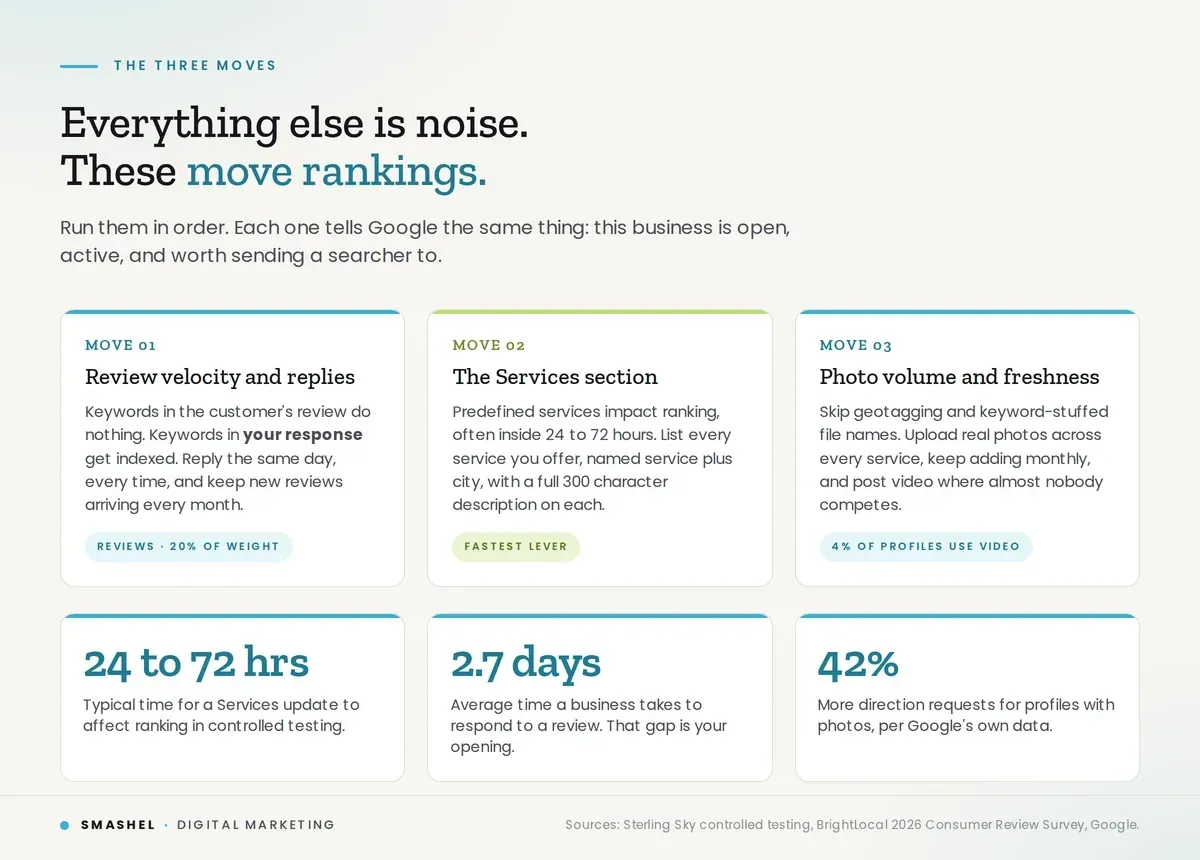
What actually moves the needle comes down to three things: review velocity paired with keyword-rich responses, the Services section, and photo volume with ongoing freshness. Three moves, in that order.

This guide walks through each one, what the testing says, and exactly what to do this week.

How Google Decides Who Ranks in the Map Pack

Picture yourself walking down a street looking for lunch. Two restaurants. The first has a beautiful sign and clean menu in the window, but it is empty inside. No servers moving, no plates being cleared. The second is less polished, but the staff are hustling and food is coming out of the kitchen.

You walk into the second one every time.

Google evaluates profiles the same way. It is not asking which listing is prettiest on paper. It is asking which business is clearly open, active, and worth sending a searcher to. Every tactic below is a version of putting movement in your front window.

Google Maps Ranking Factors That Actually Carry Weight

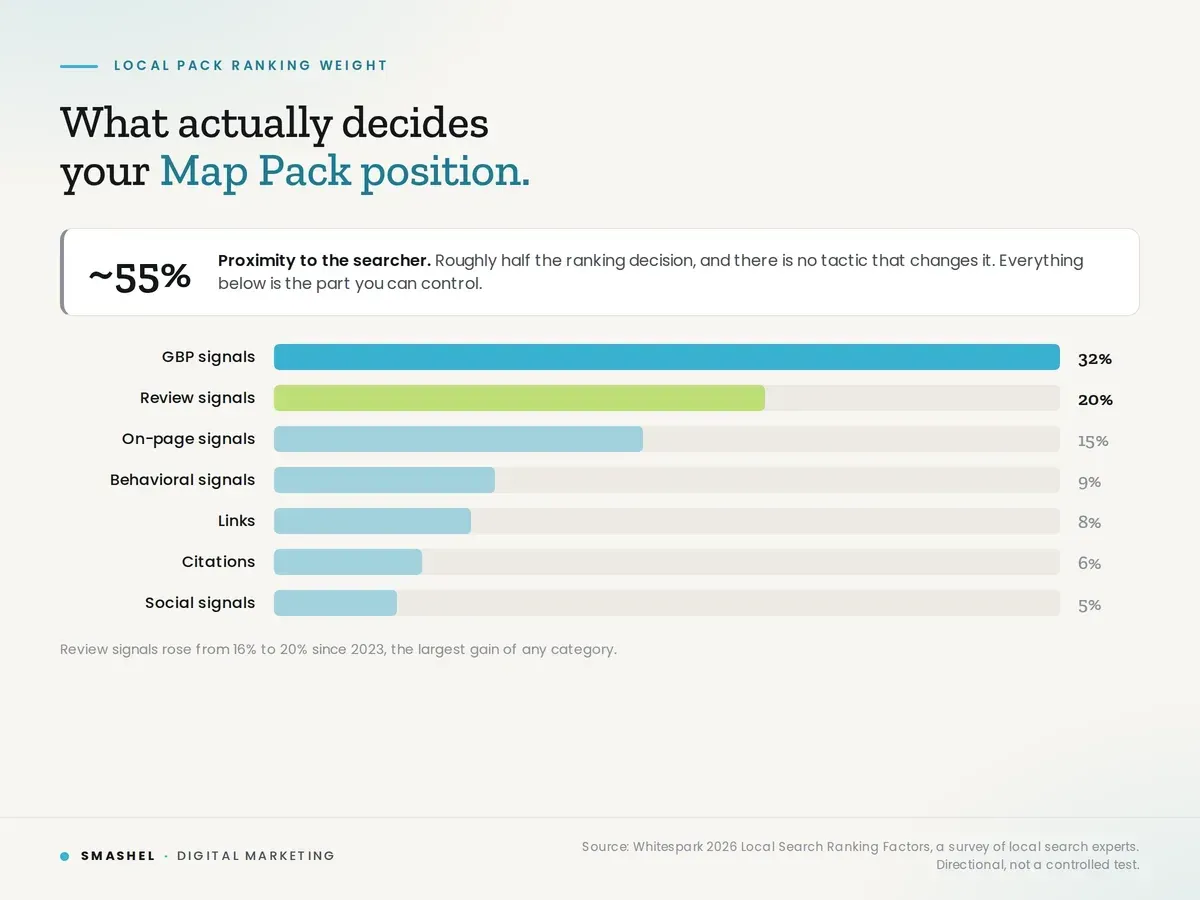
Whitespark's 2026 Local Search Ranking Factors report surveys local search experts across 187 factors. Current Local Pack weights break down like this:

  • Proximity to the searcher: roughly 55% of the ranking decision, and you cannot control it
  • Google Business Profile signals: 32%, the largest category you can control, with primary category as the single biggest individual factor
  • Review signals: about 20%, up from 16% in 2023, the biggest jump of any category
  • On-page signals: 15%
  • Behavioral signals: 9%
  • Links: 8%
  • Citations: 6%
  • Social: 5%

Worth noting: this is an expert survey, not a controlled experiment. Treat it as directional, not gospel. But the direction is clear. After your profile basics are correct, reviews are your biggest available lever.

If you want the companion piece on the engagement side of this, we covered how to rank your business on Google Maps and the two signals Google weighs most heavily.

Move 1: Review Velocity and Keyword-Rich Responses

Most owners still think Google business reviews are a volume game. Stack up 200 five-star reviews and coast. That worked years ago.

Your response is the part Google indexes

This is the detail almost nobody gets right. Sterling Sky's controlled testing found that keywords in customer review text have no ranking impact. Keywords in your response are indexed by Google as a relevance signal.

So when you reply, work your service and city in naturally. Something like: "Thanks Maria. Glad the tankless water heater installation in Gainesville went smoothly. Call us anytime." Not stuffed. Just specific.

Speed matters, but be clear about why

BrightLocal's 2026 Local Consumer Review Survey found 19% of consumers now expect a same-day response, up from 6% the prior year. 32% expect one by the next day. Meanwhile the average business takes 2.7 days, and 68% of negative reviews go unanswered entirely.

To be straight with you: there is no published controlled study proving a 30-minute reply lifts your Maps ranking on its own. What fast replies do is generate fresh, keyword-relevant content Google indexes, signal an actively managed listing, and meet an expectation your competitors are failing. That is enough reason to do it.

Velocity beats volume

Sterling Sky documented a client whose rankings dropped when staff stopped requesting reviews, then recovered once requests resumed. In separate 2025 testing, three businesses sitting at 9 reviews each saw a measurable Maps lift after reaching 10.

Five fresh reviews this month will outperform 200 reviews from three years ago.

What to do:

  1. Set an alert so every new review hits your phone.
  2. Respond same day, every time, including the negative ones.
  3. Drop your service and city into replies naturally, never templated. Half of consumers are turned off by generic responses.
  4. Build a repeatable request process so new reviews arrive every month, not in bursts.
  5. Ask for a photo with the review. Google tracks customer-submitted photos separately as third-party trust signals.

If review generation is where you keep falling down, that is a core piece of what our local SEO services handle for clients.

Move 2: The Services Section, Not the Products Section

There is one section of your profile that can lift rankings within 24 to 72 hours, and most businesses fill it out wrong or skip it.

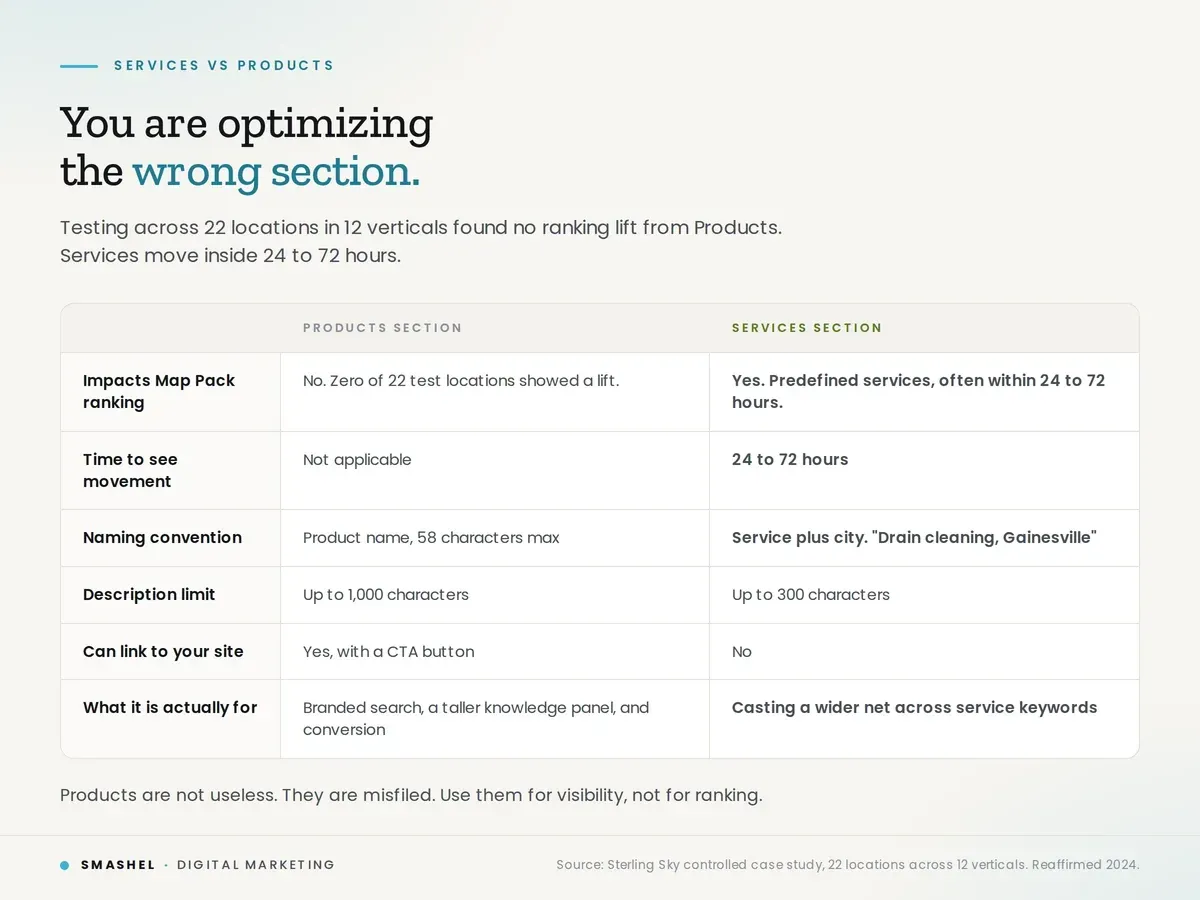
For years the play was the Products section. Load it with keywords, add descriptions, link it up, wait. Sterling Sky and Colan Nielsen tested this across 22 locations in 12 verticals, tracking rankings before and after products were added. Their conclusion: not one single case showed a ranking impact. Nielsen reaffirmed the finding again in 2024.

The Services section is the lever. Sterling Sky's testing found predefined GBP Services do impact ranking, often within 24 to 72 hours. Custom services move the needle too, just less.

How to optimize Google Business Profile Services

  1. Open Google Business Profile Manager and go to Services.
  2. Add every service you offer, not your top five. If you have 12, list 12. Each one is a separate shot at a separate search.
  3. Name each service with the keyword plus your city. "Drain cleaning, Gainesville." "Tankless water heater installation, Gainesville."
  4. Fill out the description for every single one. You get up to 300 characters, so use them.
  5. Use predefined services where Google offers them, then add custom ones for anything that does not fit.

What Products are actually good for

Products are not useless, they are just misfiled. They help with branded search, they make your knowledge panel taller so it pushes competitor listings down, and they give you a place to test images and offers. Products also carry a CTA button linking to your site, which Services cannot do.

Whitespark's study of roughly 800,000 listings found only 4% of businesses use Products at all. That is not a ranking edge, but it is a visibility edge.

One caution: link products to evergreen landing pages that will not 404. And avoid pointing your main GBP website field at your highest-ranking organic page, which Sterling Sky's Diversity Update research suggests can hurt that page's organic performance.

Move 3: Photo Volume and Freshness, Not Geotagging

This is where owners burn the most time on tactics that do nothing.

What has been tested and debunked

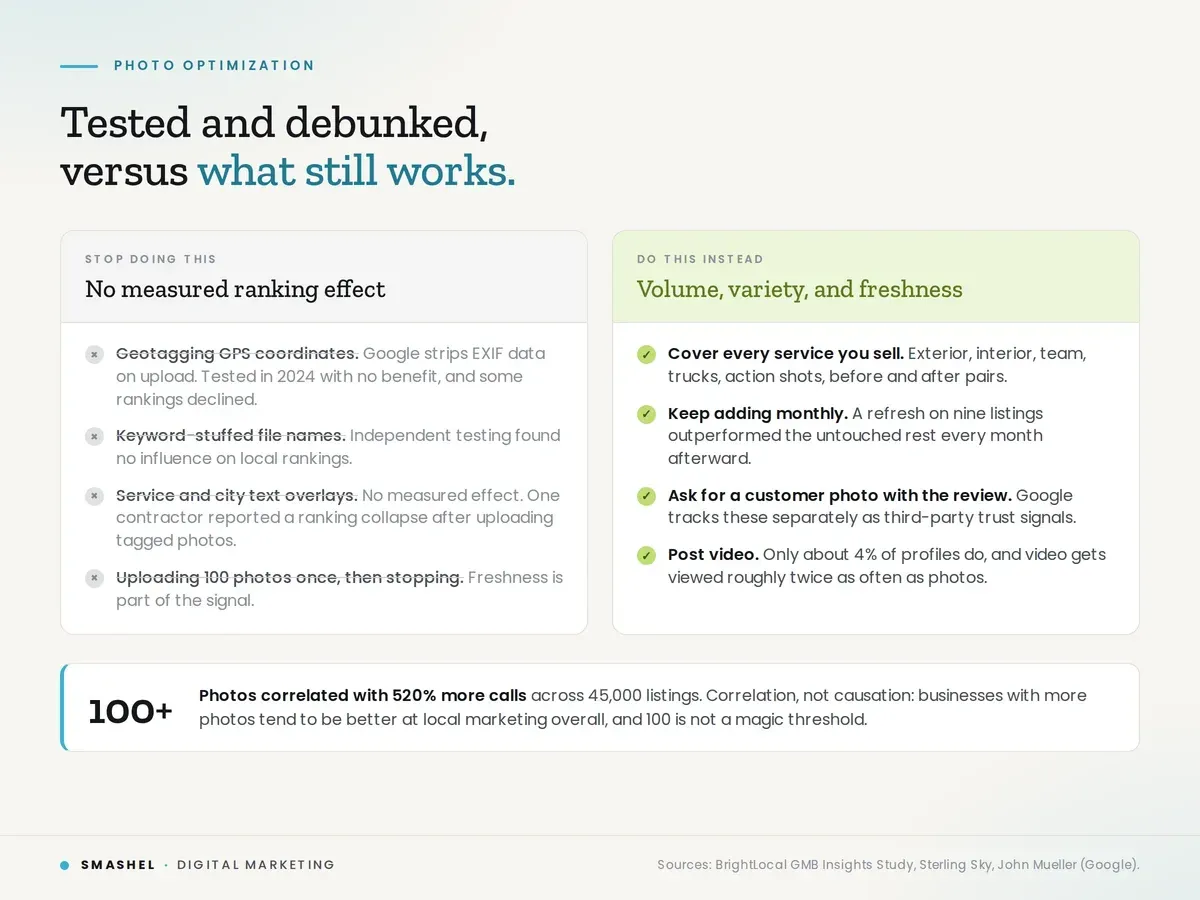
  • Geotagging GPS coordinates into photos. Google strips EXIF data on upload. John Mueller has said publicly it is unnecessary for SEO. Sterling Sky tested geotagged photos in January 2024 and found no benefit, with some rankings declining.
  • Keyword-stuffed file names. Independent tester Tim Kahlert found file name keywords have no influence on local rankings.
  • Text overlays with service and city. No measured effect. One contractor reported a ranking collapse after uploading roughly 15 keyword-and-city-tagged photos, suspecting Google read it as keyword stuffing.

Skip all three. At best they are neutral branding. They are not a secret method.

What actually correlates with performance

BrightLocal analyzed 45,000 listings across 36 industries and four countries. Businesses with more than 100 images averaged 520% more calls, 2,717% more direction requests, and 1,065% more website clicks than average. Listings with a single image got 65% fewer clicks.

That is correlation, not causation. BrightLocal says so itself: businesses with more photos are probably better at local marketing across the board, and 100 is not a magic number. Still, the direction is unambiguous.

Google's own data is more conservative and more direct: profiles that add photos get 42% more direction requests and 35% more website clicks than profiles that do not.

What to upload:

  • Exterior and interior shots
  • Your team and your trucks
  • Action shots of the work being done
  • Before and after pairs
  • Staff working with real customers
  • Logo and cover photo, properly sized

Then keep going. Do not upload 100 and walk away. RioSEO documented a multi-location client that refreshed photos on just 9 listings, and those 9 outperformed the rest every month afterward with the gap widening.

The open lane: only about 4% of profiles upload video, but videos get viewed roughly twice as often as photos. Almost nobody is competing there.

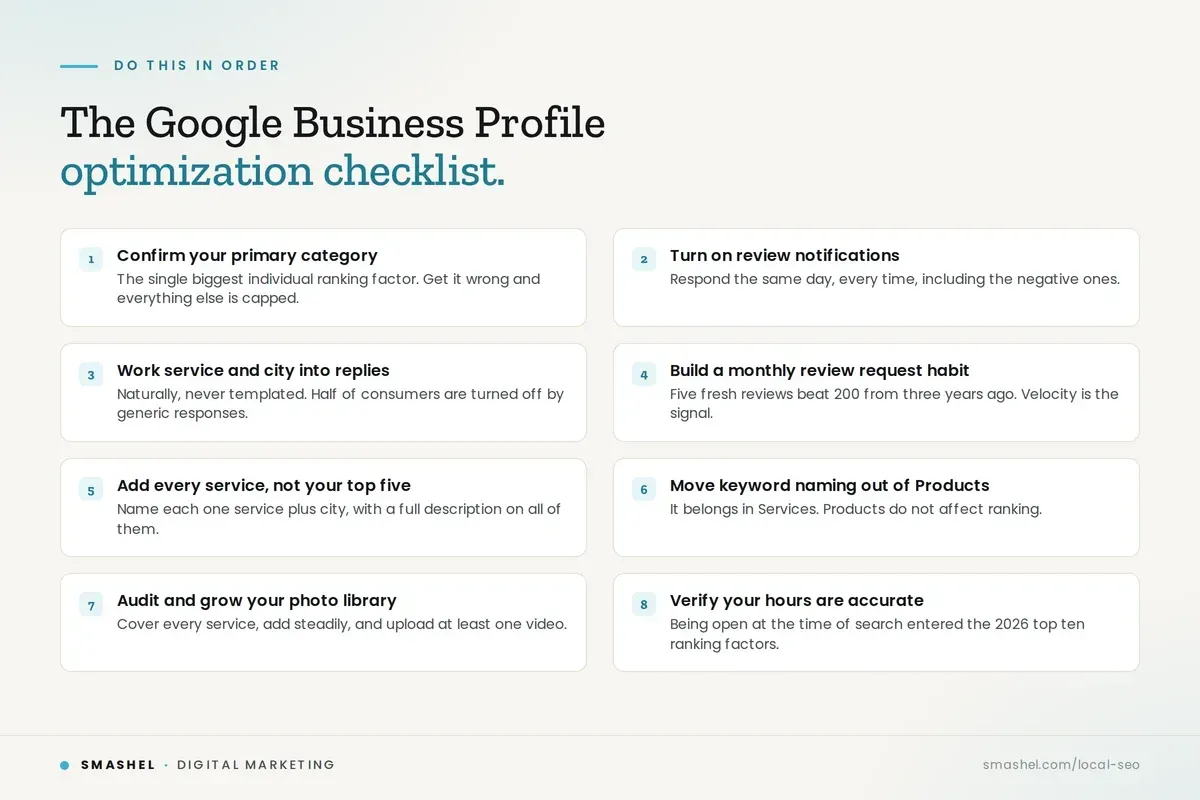
Your Google Business Profile Optimization Checklist

Work these in order:

  1. Confirm your primary category is correct. It is the single biggest individual ranking factor, and getting it wrong caps everything else.
  2. Turn on review notifications and start responding same day, with service and city worked into the reply.
  3. Build a monthly review request process so velocity never stalls.
  4. Add every service to the Services section, named keyword plus city, with a full description on each.
  5. Move any "keyword plus city" naming you had in Products over to Services.
  6. Audit your photo library. Delete nothing, add steadily, target real coverage across every service you offer.
  7. Upload at least one video. You are competing against 4% of the market.
  8. Verify hours are accurate, especially whether you are open at the time people search. Business hours entered the 2026 top 10 ranking factors for the first time.

Running multiple locations changes the math on all of this, since consistency and scale become the constraint rather than the tactics themselves. That is the problem franchise SEO exists to solve.

Frequently Asked Questions

  • How long does Google Business Profile optimization take to work?

    Services updates can show movement in 24 to 72 hours based on Sterling Sky's testing. Review and engagement signals typically take four to eight weeks to compound. Competitive markets take longer.

  • Does geotagging photos help Google Business Profile ranking?

    No. Google strips metadata on upload, and controlled tests found no benefit, with some rankings declining afterward. It's the most persistent myth in local SEO.

  • How many photos should I upload to my Google business listing?

    Aim for 100 or more real photos across every service you offer, then keep adding new ones monthly. The 100 figure comes from correlational data, so treat it as a direction rather than a finish line.

  • Do Google Business Profile Products help ranking?

    Not according to controlled testing across 22 locations and 12 verticals. Products help branded search, knowledge panel size, and conversion. Use Services for ranking.

  • How do I rank higher on Google Maps if I'm far from the city center?

    Proximity is roughly 55% of the ranking decision and can't be changed. Focus on what you control: correct primary category, a complete Services section, review velocity, engagement signals, and city-specific landing pages on your website.

What to Do Next

Ranking organically in Maps is only half the board. Directly above the Map Pack sits the Local Services Ads section, and those listings get clicked before anyone scrolls down to a business profile.

Watch the full video above for the walkthrough, then read how to optimize Google Local Service Ads to cover the spot above the Map Pack too.

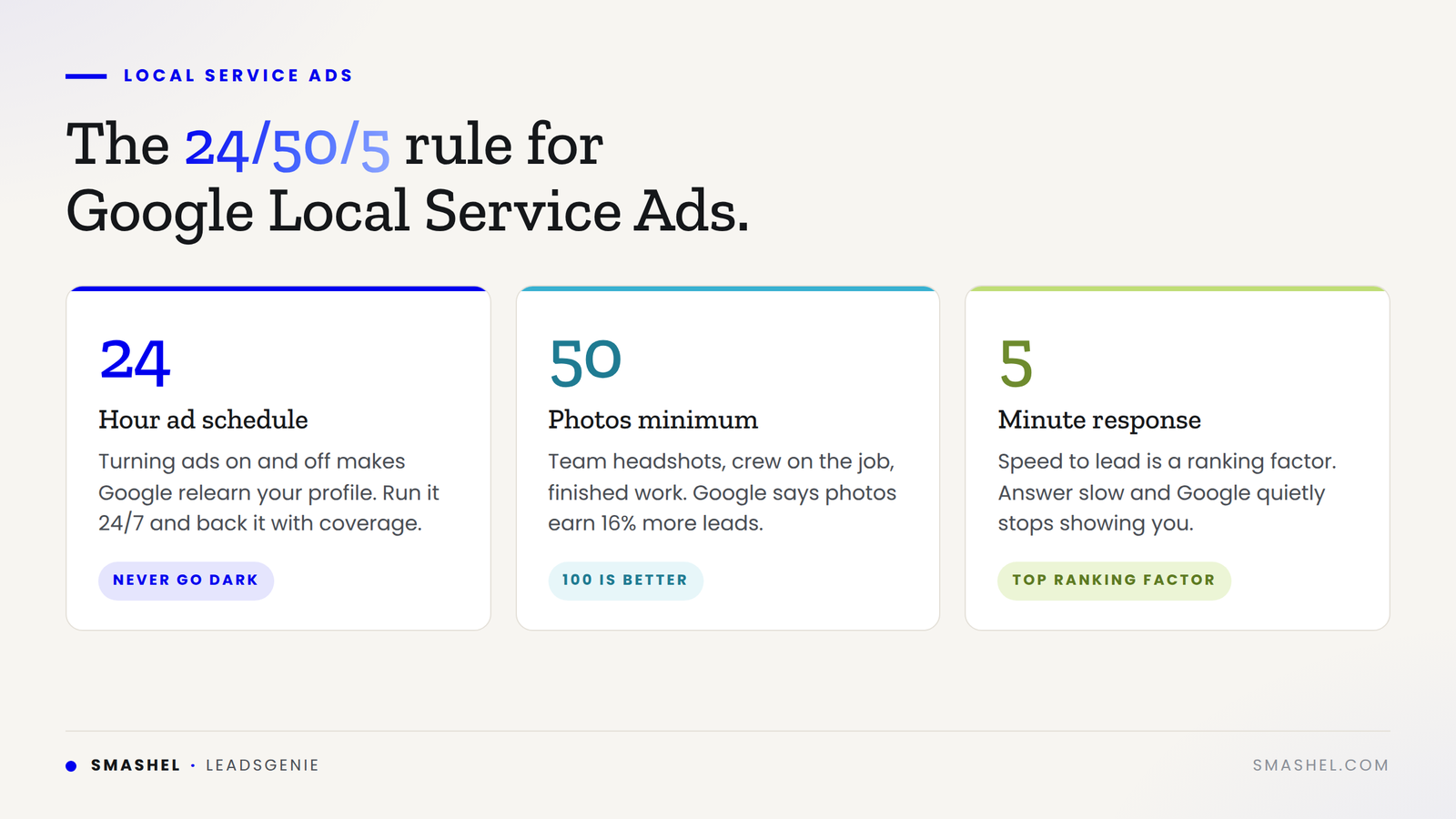
The 24/50/5 rule for how to optimize Google Local Service Ads
By Albert Quintero July 19, 2026
Learn how to optimize Google Local Service Ads with the 24/50/5 rule: a 24/7 schedule, 50+ photos, and 5-minute response time. Full profile walkthrough.
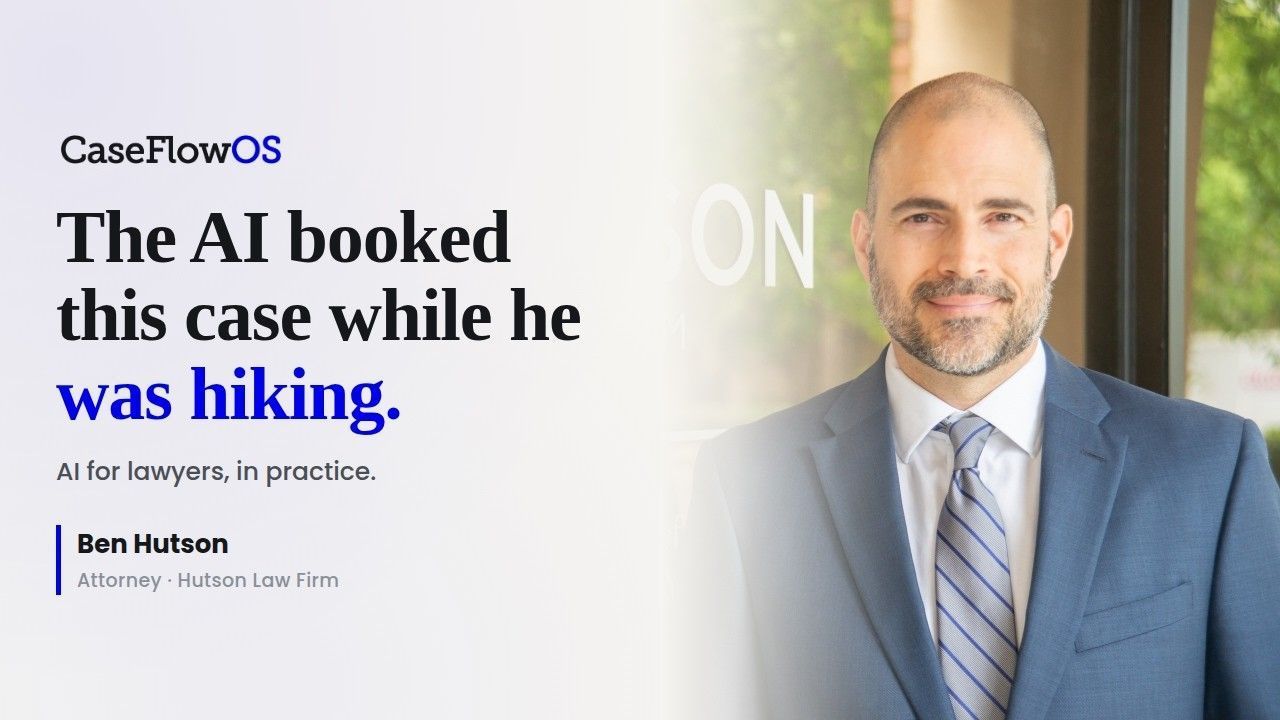
Ben Hutson, attorney, on how AI intake booked a case while he was hiking
By Albert Quintero July 14, 2026
Most law firm marketing fails at the phone, not the ad. See how a Gainesville attorney fixed his intake and got retained from a mountain in South Carolina.
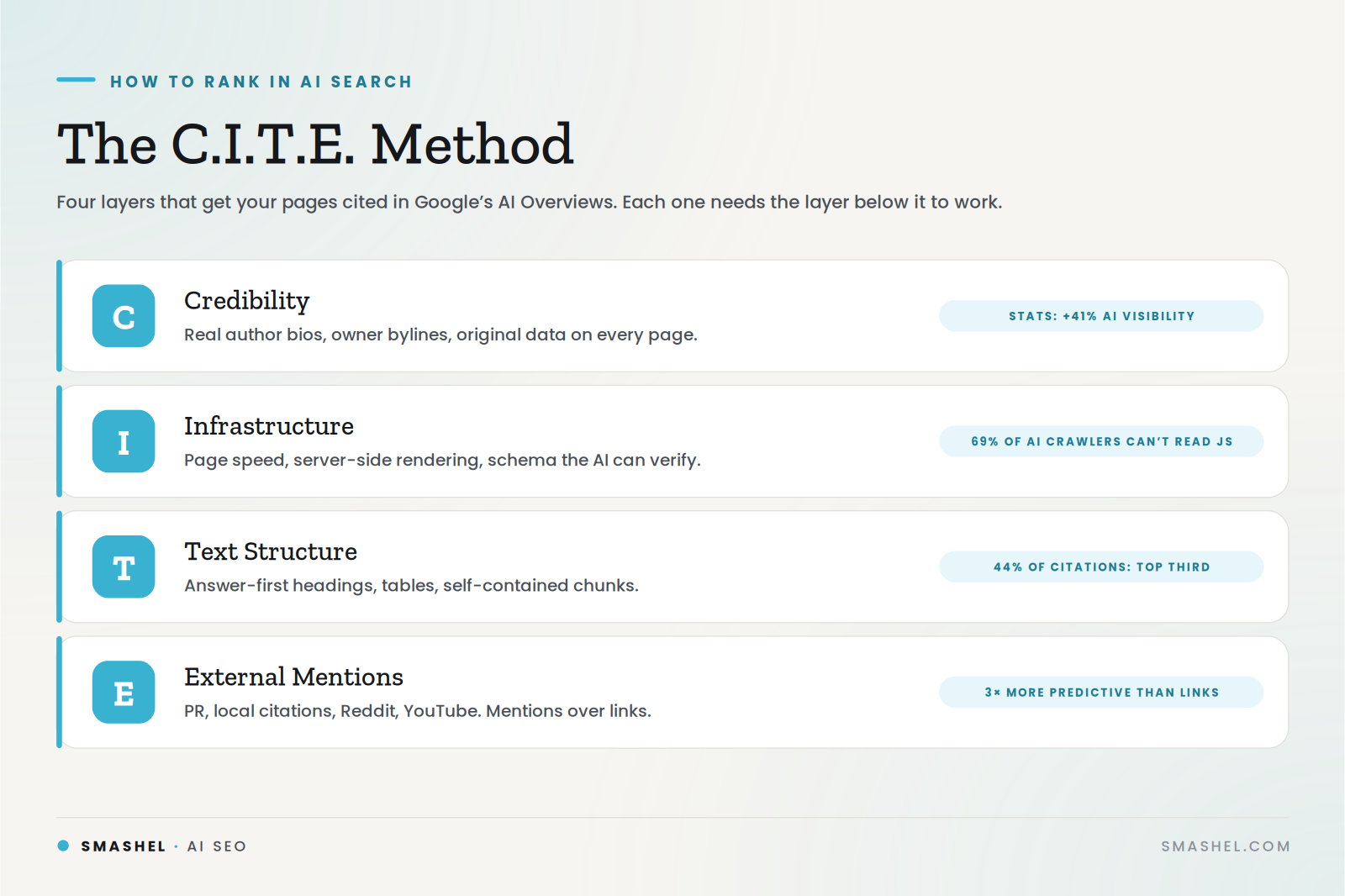
The C.I.T.E. Method for how to rank in AI search: credibility, infrastructure, text structure, external mentions
By Albert Quintero July 12, 2026
Learn how to rank in AI search with the C.I.T.E. Method: credibility, infrastructure, text structure, and external mentions that get your pages cited.

How to rank your business on Google Maps in 2026
By Albert Quintero July 5, 2026
Rank your business on Google Maps in 2026 with the two signals that matter most: navigation and calls. Learn how to drive both and win the local pack.
SEO vs AEO vs GEO Explained
By Albert Quintero June 14, 2026
AI SEO means showing up across SEO, AEO, and GEO, not just Google rankings. See how the three work and how to get found as search shifts to AI.
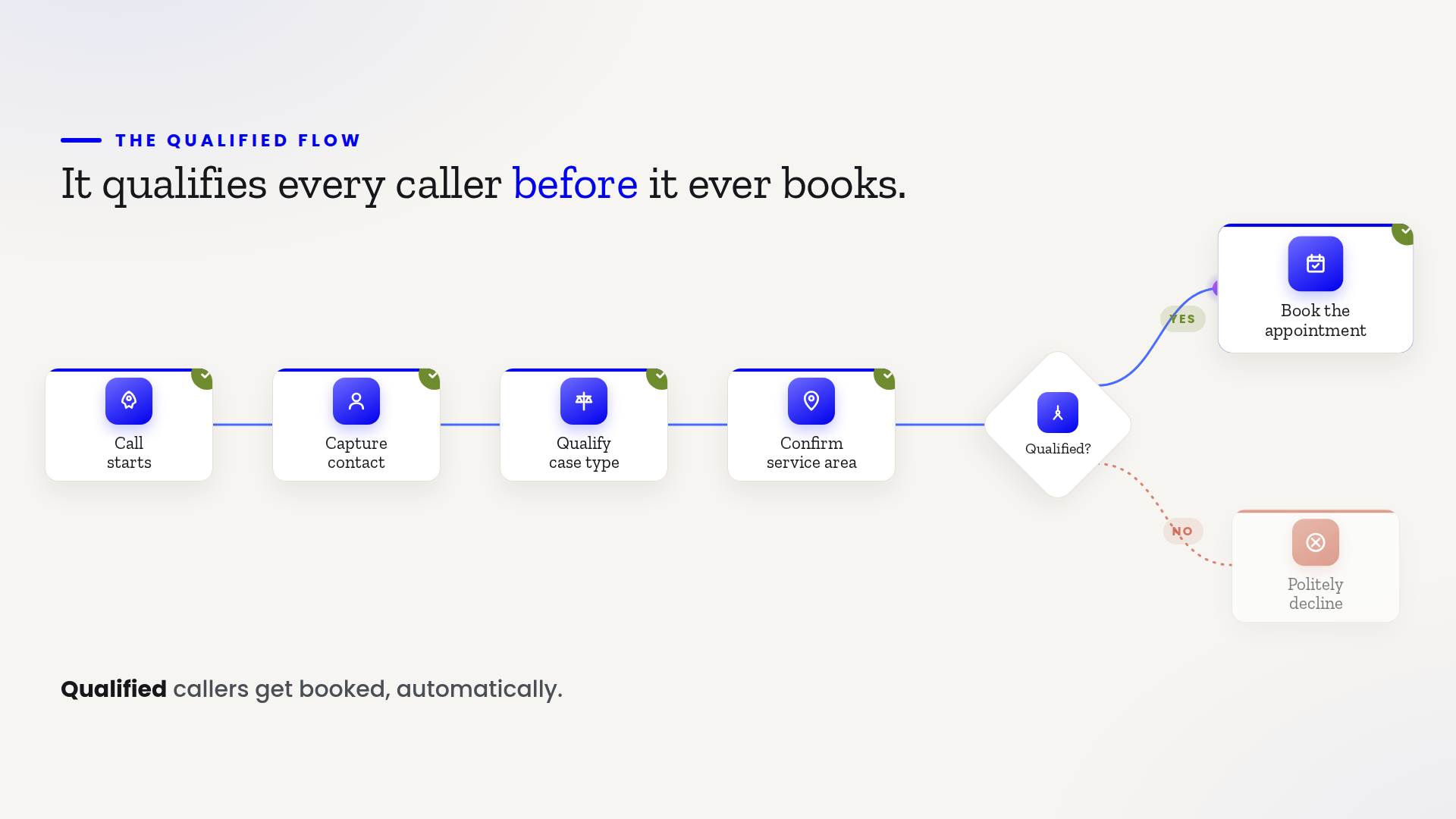
 book)How a flow-based AI receptionist is built
By Albert Quintero June 11, 2026
An AI receptionist for a law firm can book cases 24/7 or create liability. Here's how flow-based agents answer every call and only ever say what's true.
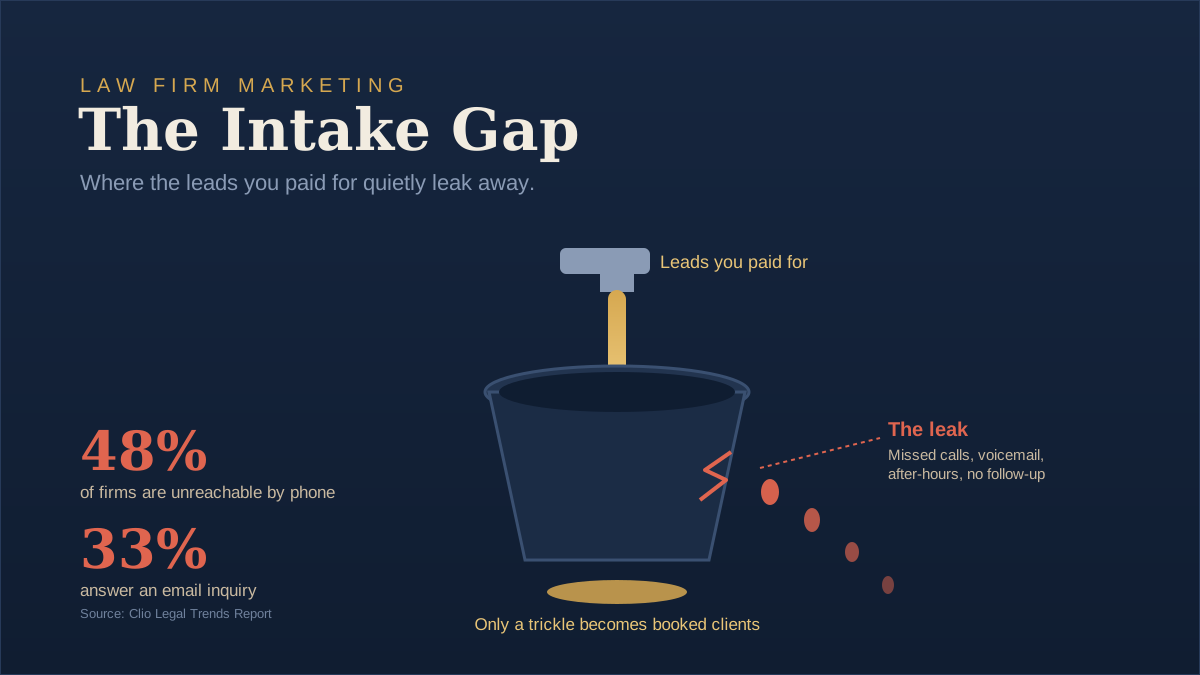
Law firm marketing funnel showing paid leads leaking out through the intake gap
By Albert Quintero June 6, 2026
Most law firm marketing fails at intake, not leads. See how the Intake Gap quietly loses clients and the simple AI fix that catches every call.
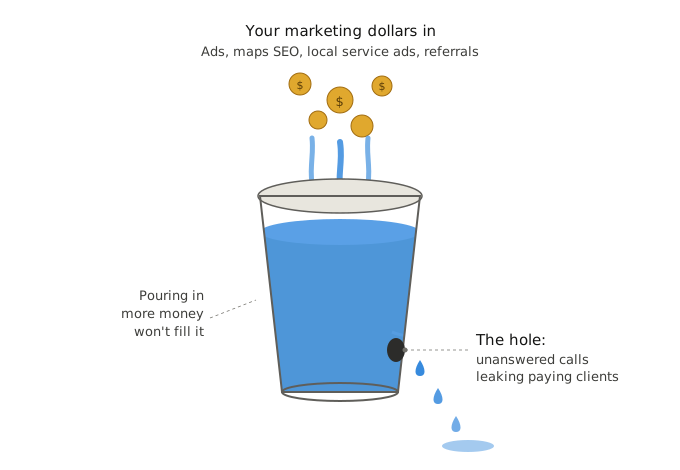
Diagram of how to stop missing calls in a business with an after-hours AI receptionist workflow
IMAG
By Albert Quintero May 31, 2026
Stop missing calls in your business and losing paying clients. See how AI receptionists answer every call 24/7 and book leads automatically.