Your Marketing Is a Leaky Bucket
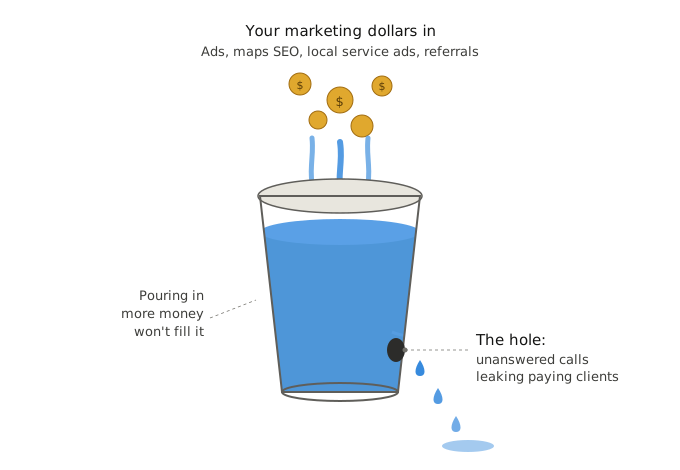
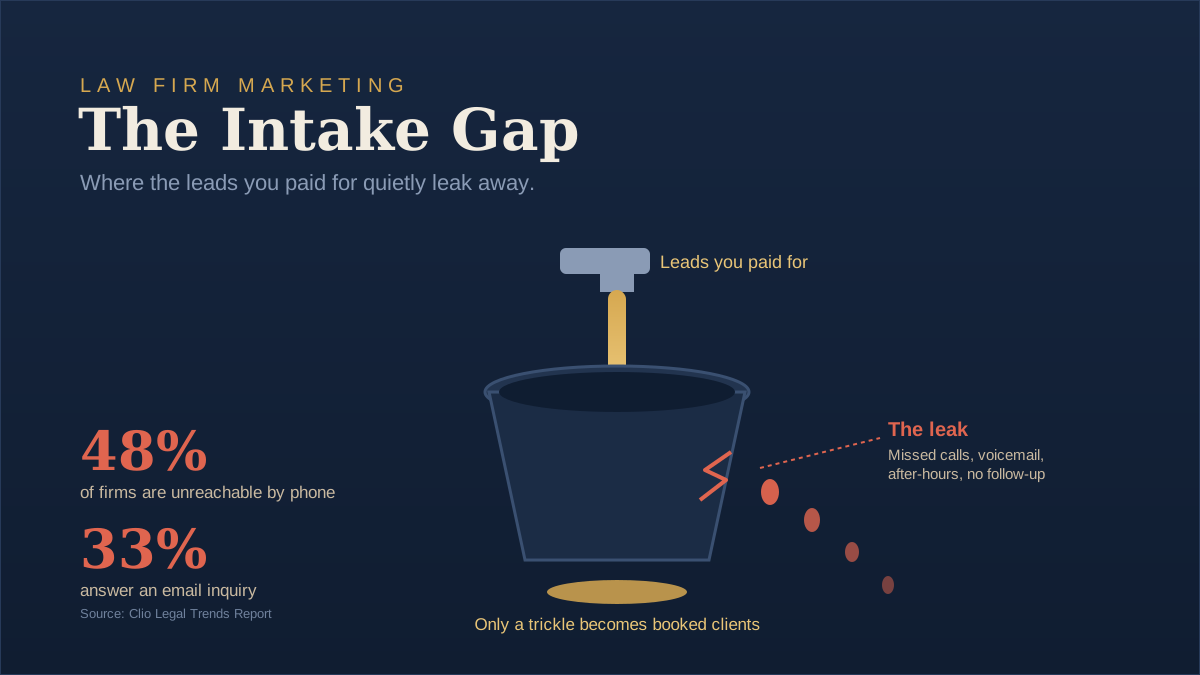
Picture filling a bucket with expensive water. Every drop costs money. That is your marketing: ads, SEO, and referrals all pouring in at the top.
But there is a hole in the bottom, and that hole is your unanswered phone. You keep pouring money in while leads leak out every time nobody answers.
Most businesses respond by pouring in more water. More ad spend, bigger campaigns. The smarter move is to plug the hole first.
What Missing Calls Cost Your Business
The numbers are worse than most owners assume.
- About
28% of business calls go unanswered. That is roughly 3 out of every 10 people who call you.
- 78% of those callers do not leave a voicemail or try again. They move on.
- 21% immediately dial a competitor. Not later. Immediately.
Every one of those callers cost you money to acquire. They clicked an ad, found you on Google, or came from a referral. When nobody picks up, that investment evaporates.
Here is the part you cannot see on a report: you never feel the specific lost deal. You just feel the slow months.
Speed Matters as Much as Answering
Answering is only half the battle. How fast you respond decides whether you win the deal.
MIT studied more than 100,000 call attempts and found that calling a lead back within 5 minutes instead of 30 made you
100 times more likely to reach them.
Most businesses are not calling back in 30 minutes. They are calling back the next morning, and by then the caller has booked with someone else.
72% of customers expect immediate service, and 90% of them define "immediate" as under 10 minutes. If you close at 5 and return calls at 9, you are not even in the game.
Why the Usual Fixes Do Not Work
If you have tried to solve missed calls before, you have probably reached for one of these. Here is why each one falls short:
- Voicemail: Most people will not leave one, especially when they are shopping around.
- Hiring more staff: Expensive, limited to business hours, and one person handles one call at a time.
- Traditional answering services: Glorified message-takers. They do not qualify leads, book appointments, or update your CRM.
None of these match the speed or scale today's caller expects. That gap is exactly where your money disappears.
The After-Hours System That Plugs the Hole
The fix that actually works is an AI receptionist. Not a clunky "press 1 for sales" robot, but an AI agent that has a real conversation, understands what the caller needs, and handles it on the spot.
Here is what makes it different.
It Answers Every Call, 24/7
AI receptionists run nights, weekends, and holidays. Two in the morning on a Sunday? Answered.
They also handle up to
200 concurrent calls from a single line. So during your busy season, or when a storm hits and everyone calls at once, nobody gets a busy signal or hold music. They just get answered.
This is not about replacing your team. During business hours the AI handles overflow. After hours it takes over completely. Your staff goes home, the system keeps running, and the caller does not know the difference.
It Qualifies the Lead in Real Time
Answering is just the start. The real value is what happens while the caller is still on the line.
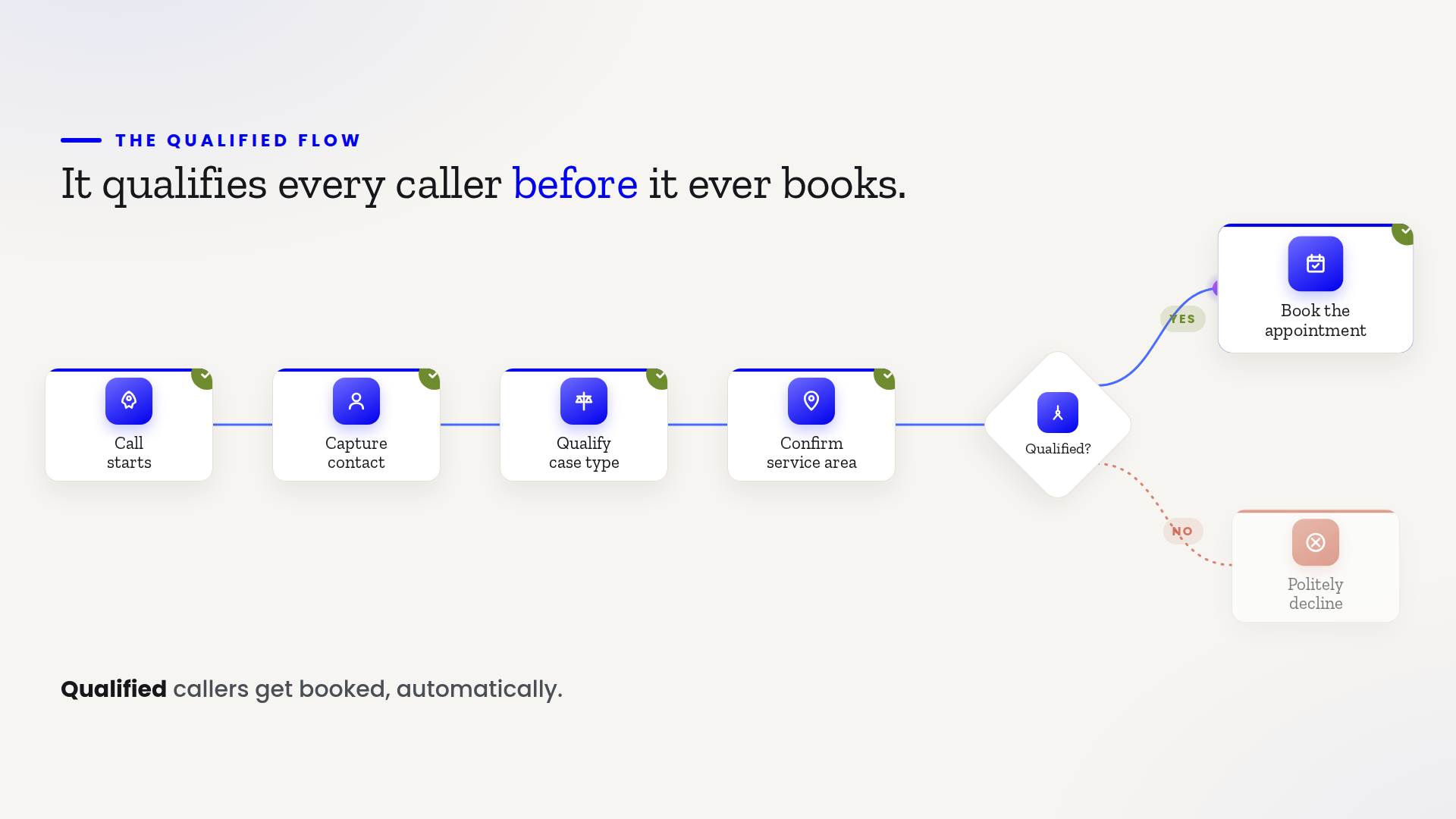
The AI asks qualifying questions instantly: What service do you need? How urgent is it? Where are you located? It gathers everything your team would normally collect, on the first interaction, without anyone lifting a finger.
It Books the Appointment and Updates Your CRM
As it talks, the AI pushes everything straight into your CRM. Name, number, the service needed, the timeline, all captured accurately. No sticky notes, no re-entry, no lost details.
Then it books the appointment right there on the call. The lead goes from stranger to scheduled in a single conversation. Your team shows up to a CRM full of qualified, booked leads instead of a pile of callbacks to chase.
It Follows Up Automatically
Not every lead books on the first call. Sometimes people need to think.
That is where voice and messaging work together. The moment a call ends without a booking, the system fires off a text with a booking link and a summary of what was discussed. The thread stays alive, and nobody on your team had to do a thing.
Real Results From Plugging the Leak
Two quick examples show what closing this gap looks like.
A
family law attorney ran her practice the standard way: office hours, voicemail after five. After she added after-hours coverage, she picked up
12 new cases in a few months from people calling at night and on weekends, clients who otherwise would have moved on.
An
HVAC company discovered
$45,000 in lost opportunities from missed calls. Within one month of plugging the gap, they had cut that to
$4,500. Same business, same marketing spend. They just stopped letting leads hit the floor.
How to Apply This to Your Business
You do not need to overhaul everything at once. Start here:
- Find your leak. Look at your call logs and estimate how many calls go unanswered, especially after hours and during busy periods.
- Calculate the cost. Multiply missed calls by your average job or client value. That number is usually the wake-up call.
- Cover after-hours first. This is where the easy wins are, since most competitors are closed too.
- Make sure the system qualifies and books, not just answers. Answering without booking still leaves money on the table.
- Connect it to your CRM so every lead is logged with full context and nothing gets re-entered by hand.
Frequently Asked Questions
Why am I missing so many calls from customers?
Most missed calls happen after hours, during busy stretches when every line is tied up, or when one person can only take one call at a time. On average about 28% of business calls go unanswered, so the problem is more common than most owners realize.
How can I answer business calls after hours without hiring staff?
An AI receptionist answers calls 24/7, qualifies the caller, books the appointment, and updates your CRM without adding headcount. Your team goes home and the system keeps capturing leads.
What is the best way to handle missed calls in a business?
Plug the gap before spending more on marketing. Use a system that answers every call, qualifies the lead, books on the spot, and follows up by text automatically so no hot lead slips through.
Will an AI receptionist sound like a robot?
A modern AI agent holds a real conversation, understands what the caller needs, and handles it naturally. It is not the old "press 1 for sales" menu, and callers mainly want someone to pick up and help quickly.
Does an AI receptionist replace my team?
No. It handles overflow during business hours and takes over after hours, so your staff can focus on delivering the service instead of playing receptionist.
Watch the Full Breakdown
The video above walks through the entire after-hours workflow, from the first ring to the booked appointment. If you want to see where your business is leaking leads and what a system like this would look like for you, book a discovery call using the link in the description.