How to Rank in AI Search: The C.I.T.E. Method

Albert Quintero • July 12, 2026

Your traffic is slipping and your rankings barely moved. That combination confuses a lot of business owners, but the explanation is simple. Google now answers your customer's question at the top of the page, using content pulled from sites like yours, and nobody clicks through.

Learning how to rank in AI search is not a replacement for SEO. It is a layer on top of it. The old playbook still works, it is just incomplete.

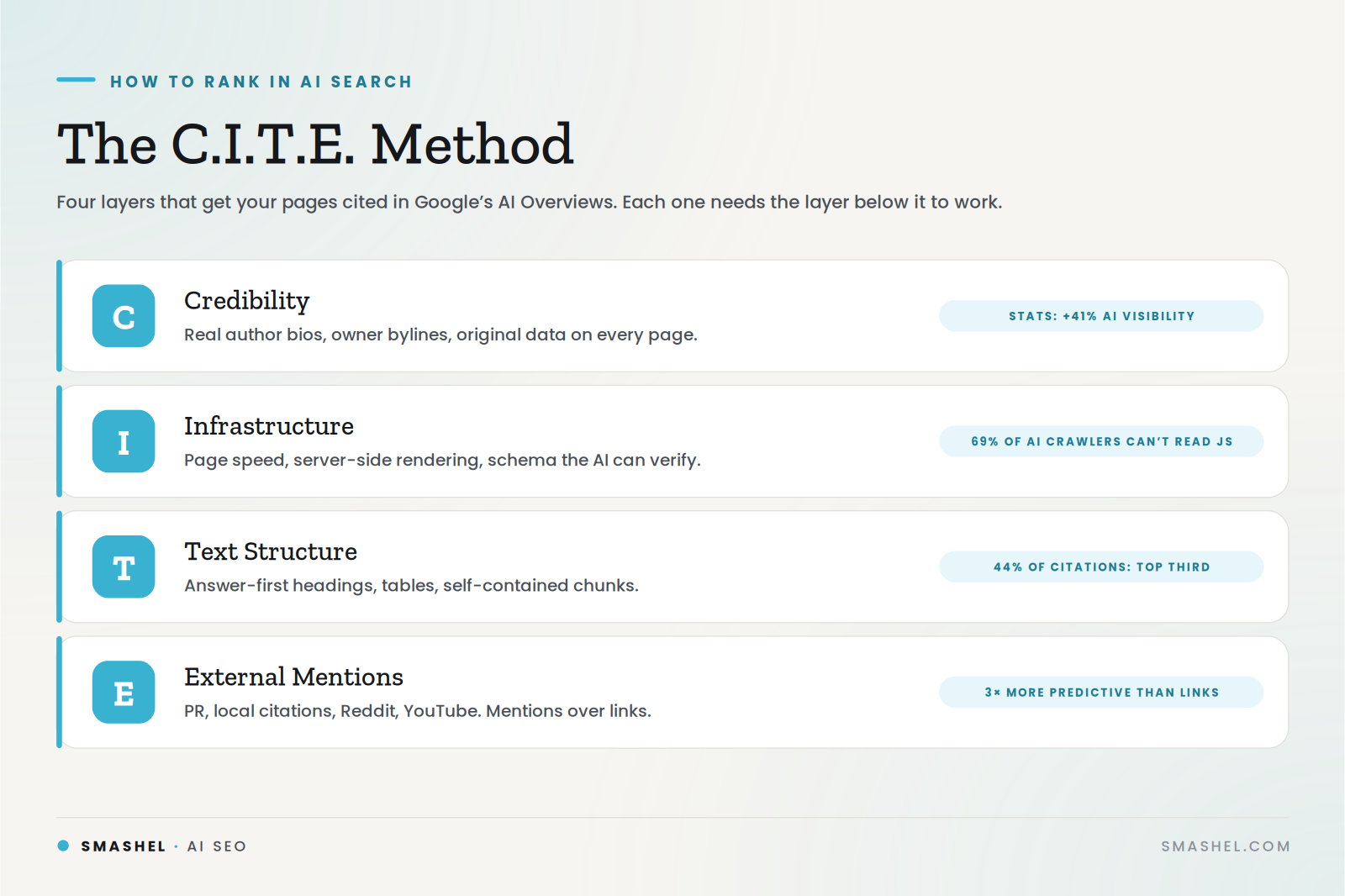
The sites winning right now are all doing the same four things. I call it the C.I.T.E. Method: Credibility, Infrastructure, Text Structure, and External Mentions. Below is the full breakdown, plus the exact moves to make on your own site this week.

Why AI Search Broke Your Traffic

Search results used to be a list of links. Now they are an answer with a few citations attached.

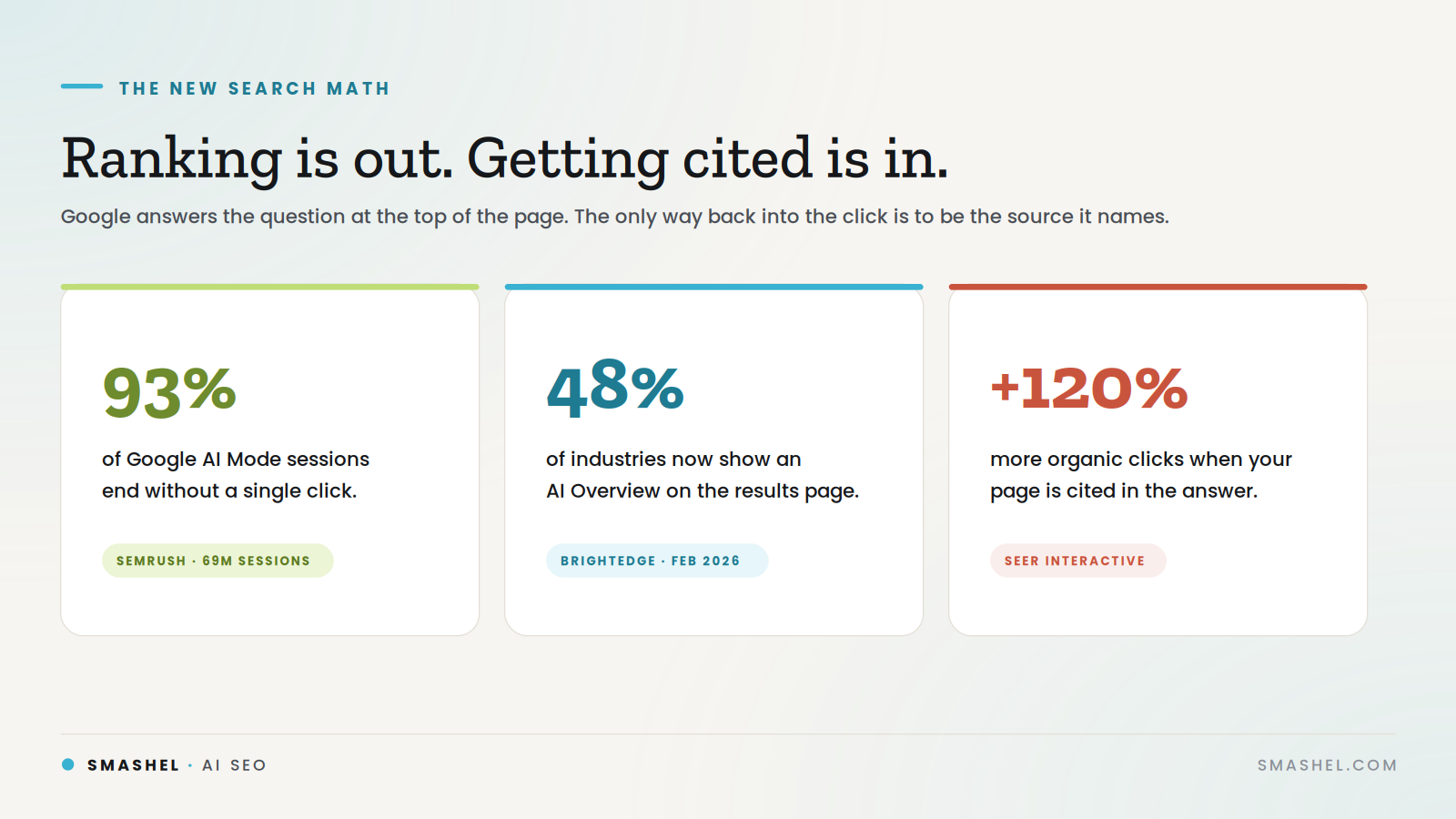
The click math is brutal. Semrush analyzed 69 million sessions and found that 93% of Google AI Mode sessions end without a click, compared to 83% for AI Overviews and 60% for a normal result page. BrightEdge reports AI Overviews now appear across 48% of industries, with 80% or more coverage in health, education, and B2B tech.

Here is the flip side, and it is the whole reason this article exists. Seer Interactive found that being cited inside an AI Overview delivers roughly 120% more organic clicks and about 35% higher click-through rate than not being cited on the same result page.

Ranking is no longer the goal. Getting cited is. That is what generative engine optimization actually means, and it is the shift the C.I.T.E. Method is built around.

The C.I.T.E. Method: A Four-Layer Stack

Think of C.I.T.E. as a stack. Each layer needs the one below it. Perfect content does not matter if your site is slow. Perfect schema does not matter if nobody online is talking about you.

Layer What it means The core move
C Credibility Prove a real expert wrote this Author bios, owner bylines, original data
I Infrastructure Make sure AI can read your site Speed, server-side rendering, schema
T Text Structure Format so AI can extract answers Answer-first headings, tables, chunks
E External Mentions Get the internet talking about you PR, citations, Reddit, YouTube

Work up the stack in order. Skipping to content while your site renders blank to crawlers is wasted effort.

C Is for Credibility

Google's AI is paranoid about citing the wrong source. Your job is to make it obvious that you are legitimate.

Give every post a real author

Every blog post needs an author bio with a real photo, a real name, and real credentials, linked out to LinkedIn. That is how the AI confirms a human expert stands behind the page. BrightEdge found that sites using author schema are three times more likely to appear in AI answers.

Kill the "Admin" byline

Attribute posts to the owner of the business, almost like a mini press release. "Admin" and "The Team" bylines are dead weight. They give the AI nothing to verify.

Add original data

This is the step most people skip, and it is the one that pays. A Princeton study on generative engine optimization measured what actually moves AI visibility:

  • Adding statistics to content: +41% AI visibility
  • Adding quotations: +28%
  • Citing your sources: up to +115% for lower-ranked pages
  • Keyword stuffing: -10% , it now actively hurts you

Drop a number nobody else has. Share a real client result. Publish one original insight per page. That is what gets you cited instead of the thousand sites recycling the same advice.

I Is for Infrastructure

This is the boring technical layer, and it decides whether the AI can read your site at all.

Page speed

If your site loads slowly, AI crawlers bail. Core Web Vitals need to be green across the board. No exceptions.

Server-side rendering

This is the one almost nobody talks about. Roughly 69% of AI crawlers cannot execute JavaScript, according to research from Vercel and MERJ. If your site renders client-side, the AI sees a blank page.

That is why I put clients on Duda. Server-side rendering is built in, schema is auto-generated, and 82% of Duda sites pass all three Core Web Vitals out of the box.

Schema markup

At minimum, run Organization, Person, and Article schema on every post. Connect them with sameAs links pointing to your LinkedIn or Crunchbase. That is the entity backbone the AI uses to verify who you are.

Does schema help AI search? It is a force multiplier, not a magic switch. SE Ranking found that 65% of pages cited by Google's AI Mode include structured data. Correlation, not a guaranteed ranking factor, but the pattern is hard to ignore. If you want this handled properly, that is exactly what our AI SEO services are built for.

Check your DNS and CDN

About 27% of business sites are accidentally blocking AI crawlers through CDN-level rules without knowing it. Check Cloudflare or whatever sits in front of your site, not just robots.txt.

T Is for Text Structure

This is how you format content so AI can actually pull from it. Most sites get it completely wrong.

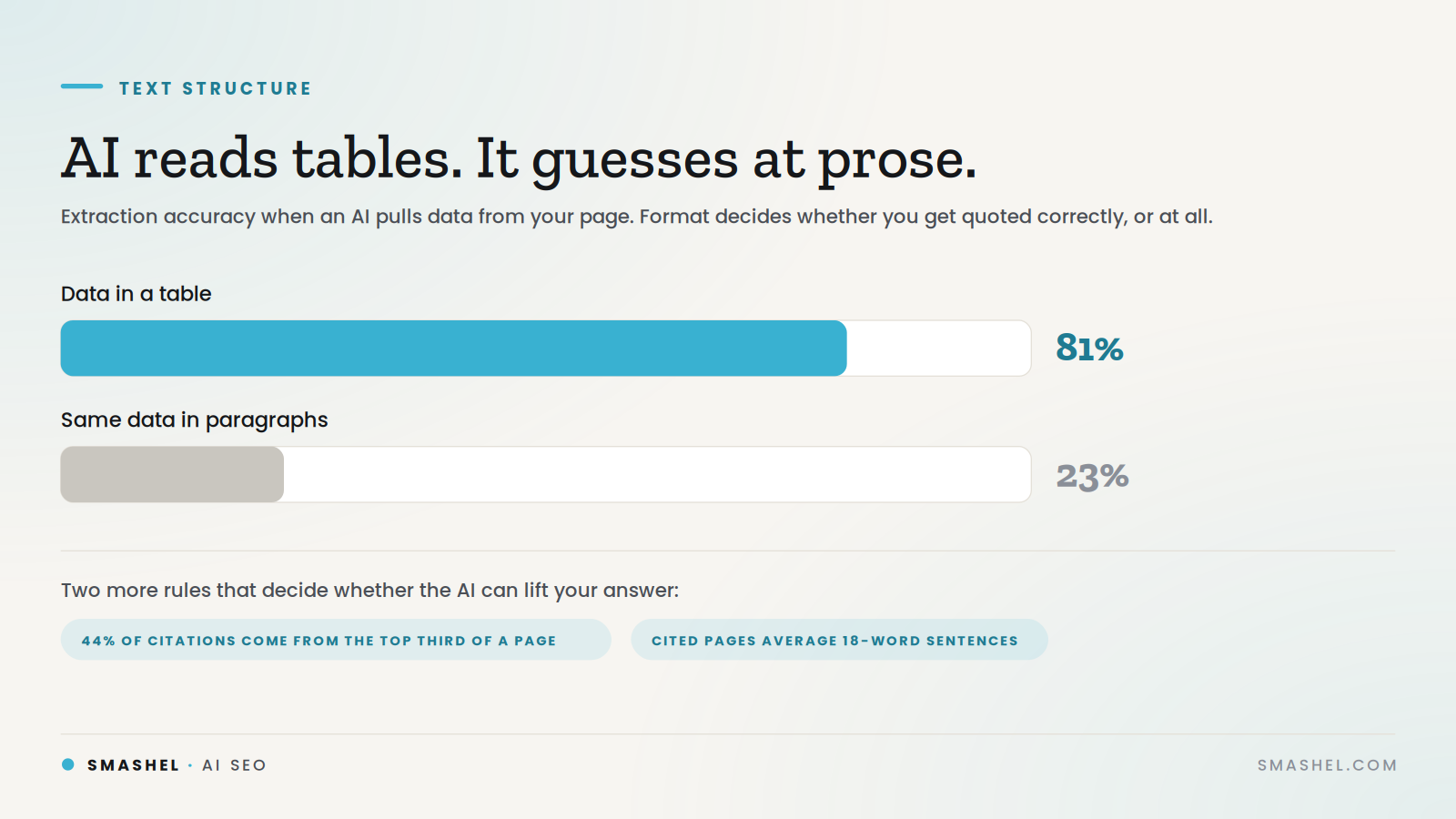
  1. Question as your heading, answer in the next sentence. Not three paragraphs of setup. About 44% of AI citations come from the first third of a page. Bury the answer and you do not exist.
  2. Use tables. AI extracts data from tables with 81% accuracy versus just 23% from prose. Comparing options? Listing prices? Table it.
  3. Keep FAQ schema. Google killed the visual FAQ rich snippet, but the AI still reads FAQPage markup. It is an extraction tool now, not a snippet tool.
  4. Write self-contained chunks. Every section has to stand alone. No "as I mentioned above." The AI grabs one chunk at a time, so each one needs to make sense by itself.

Keep sentences tight while you are at it. Heavily cited content averages around 18 words per sentence.

E Is for External Mentions

This is the layer that flips 25 years of SEO thinking.

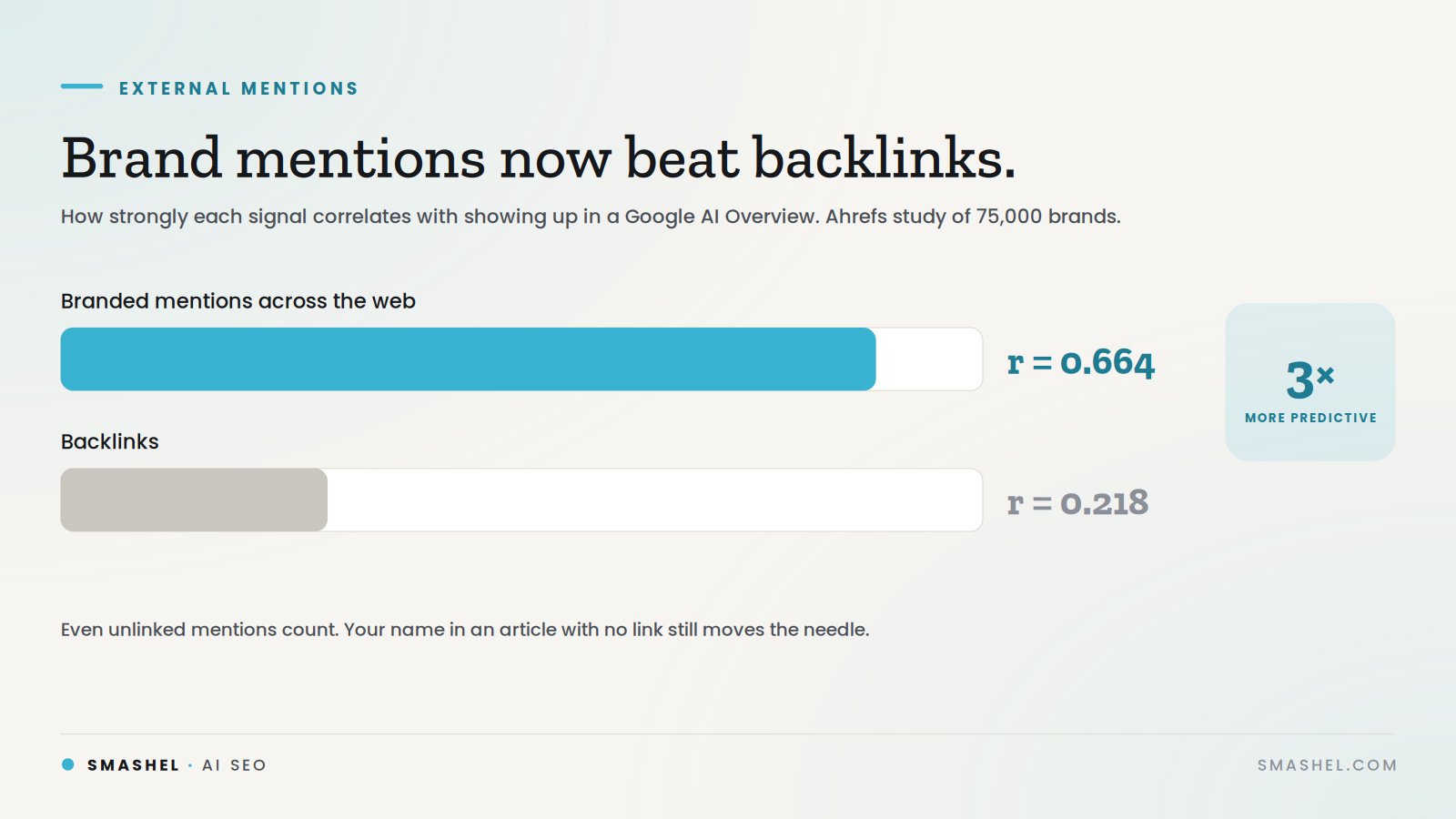
Do backlinks still matter for AI search? Yes, but they are no longer the main event. Ahrefs studied 75,000 brands and found that branded web mentions correlate with AI Overview visibility far more strongly than backlinks do, roughly three times as predictive.

Google's AI cares more about who is talking about you than who is linking to you. Even unlinked mentions count. Your brand name in a Forbes article with no link still moves the needle.

Three plays:

  • Digital press releases. Industry publications, podcasts, roundup articles. A nofollow link is fine. The mention is the asset.
  • Local citations. Get your name, address, and phone number identical everywhere. The AI treats consistency as a trust signal.
  • Reddit. Google pays Reddit roughly $60 million a year to license its data for AI. Get into the threads where your customers are asking questions. Help, do not spam.

The bonus play: YouTube

If you want the highest-leverage move available, make video. BrightEdge found YouTube is the number one cited domain in Google's AI Overviews at 29.5% of all citations, ahead of Wikipedia and Mayo Clinic.

A single well-titled, properly transcribed YouTube video can rank in AI search on its own. If you are not making video yet, start.

Do Not Forget the Map Pack

C.I.T.E. is how you show up in AI Overviews. There is still one piece of Google real estate driving massive clickable traffic, and it sits above everything: the map pack.

When someone searches a local service, Google Maps loads first. Above the AI Overview. Above the blue links. Those businesses are getting phone calls every day. We broke that down step by step in how to rank your business on Google Maps.

If you serve customers beyond your city, the same principles scale into a national SEO strategy, where mentions and entity signals do even more of the heavy lifting.

How to Apply the C.I.T.E. Method This Week

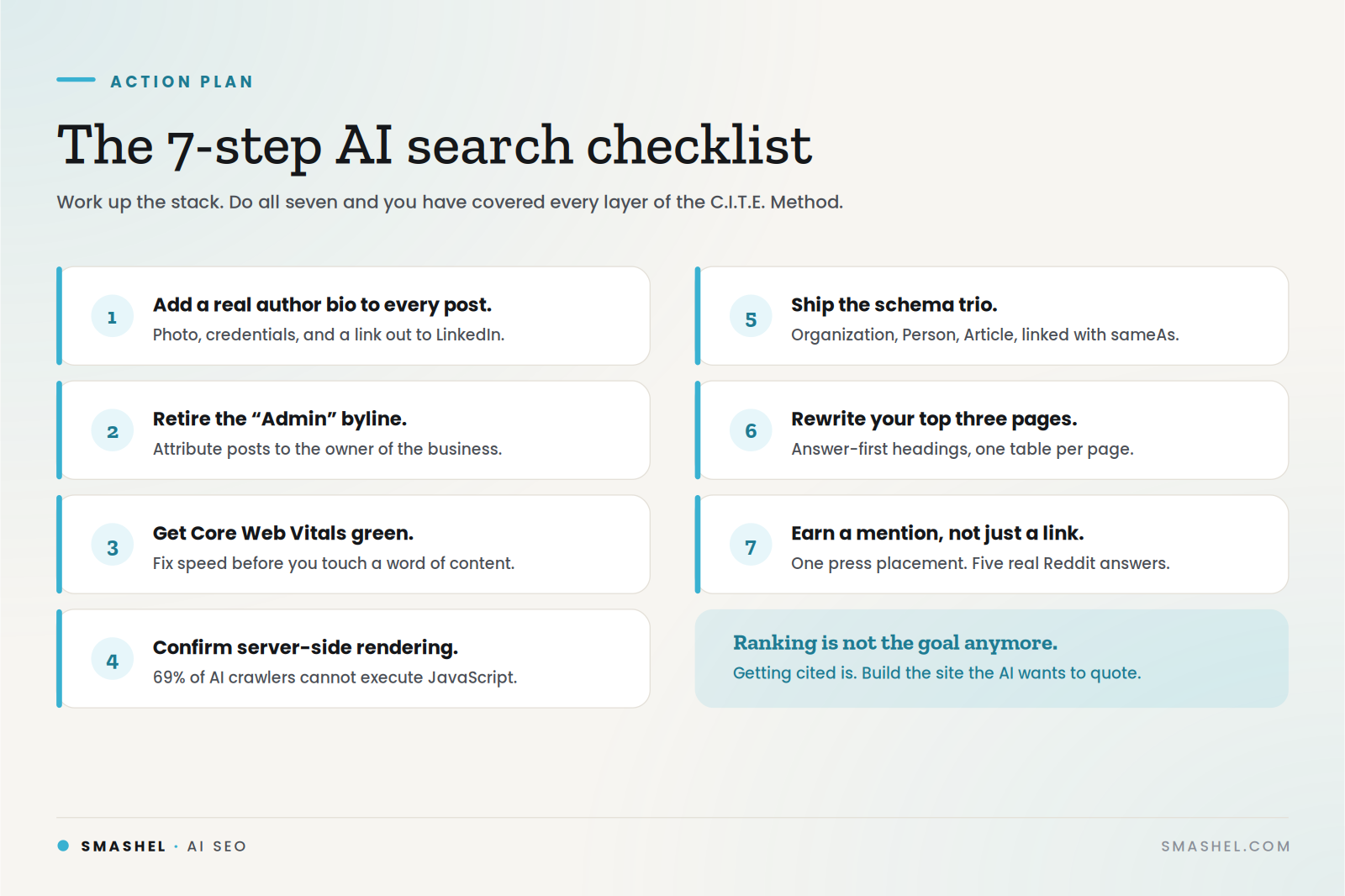
  1. Add a real author bio with a photo, credentials, and a LinkedIn link to every blog post.
  2. Rewrite your bylines so posts are attributed to the business owner, not "Admin."
  3. Run a Core Web Vitals check. If you fail, fix speed before you touch content.
  4. Confirm your site renders server-side, not client-side.
  5. Add Organization, Person, and Article schema with sameAs links.
  6. Rewrite your top three pages answer-first, with one table each.
  7. Pitch one press mention and answer five real Reddit questions in your niche.

Do all seven and you have covered every layer of the stack.

Frequently Asked Questions

  • How long does it take to rank in AI search?

    Faster than traditional SEO in most cases, because citation depends on extractability and mentions rather than years of domain age. Expect movement in weeks once your infrastructure and structure are fixed, but treat it as ongoing maintenance. AI Overview citations turn over constantly.


  • Is AI search optimization different from SEO?

    It is a layer on top of SEO, not a replacement. You still need indexable, relevant, well-linked pages. The difference is that AI rewards extractability, entity clarity, and brand mentions instead of just rankings and backlinks.


  • Does schema markup guarantee AI citations?

    No. Google has confirmed schema is not a direct ranking factor. What it does is make your identity and content machine-readable, which is why cited pages so consistently have structured data on them.


  • What is the best way to get cited by AI as a local business?

    Nail NAP consistency across your site, Google Business Profile, and every directory, then add LocalBusiness schema. Inconsistent details reduce the AI's confidence in citing you at all.


  • Do I need long blog posts to rank in AI search?

    No. Ahrefs found essentially no correlation between word count and citation, and more than half of cited pages run under 1,000 words. Original insight beats length every time.


  • Ready to Get Cited Instead of Skipped?

    Watch the full video above for the walkthrough, then pick one layer of the C.I.T.E. stack and fix it this week. Credibility and text structure are the fastest wins for most sites.

Ready to Get Cited Instead of Skipped?

Watch the full video above for the walkthrough, then pick one layer of the C.I.T.E. stack and fix it this week. Credibility and text structure are the fastest wins for most sites.

If you would rather have the whole stack built and maintained for you, that is what we do. Take a look at our AI SEO services and we will show you where your site is leaking citations.

How to rank your business on Google Maps in 2026
By Albert Quintero July 5, 2026
Rank your business on Google Maps in 2026 with the two signals that matter most: navigation and calls. Learn how to drive both and win the local pack.
SEO vs AEO vs GEO Explained
By Albert Quintero June 14, 2026
AI SEO means showing up across SEO, AEO, and GEO, not just Google rankings. See how the three work and how to get found as search shifts to AI.
 book)How a flow-based AI receptionist is built
By Albert Quintero June 11, 2026
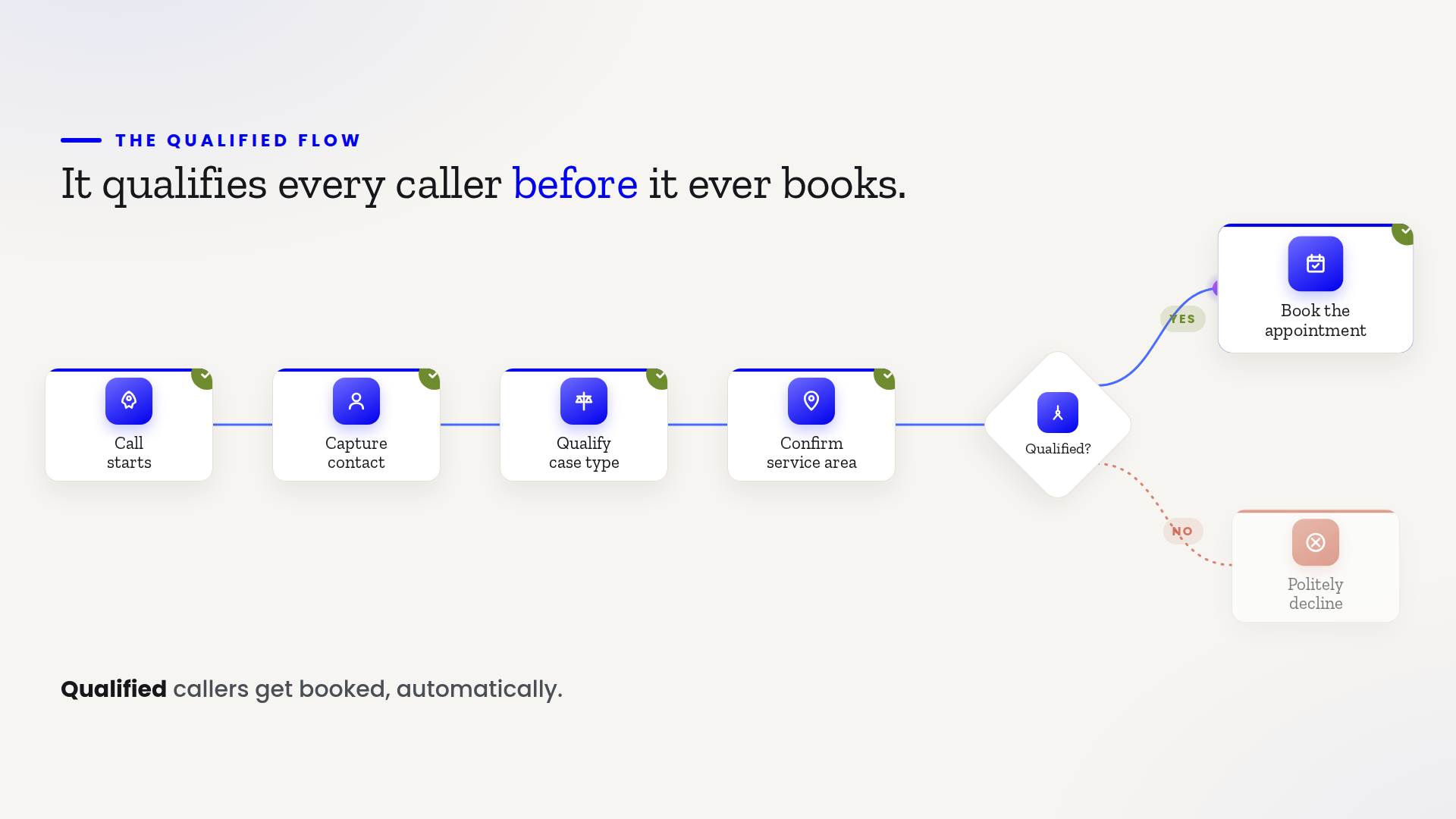
An AI receptionist for a law firm can book cases 24/7 or create liability. Here's how flow-based agents answer every call and only ever say what's true.
Law firm marketing funnel showing paid leads leaking out through the intake gap
By Albert Quintero June 6, 2026
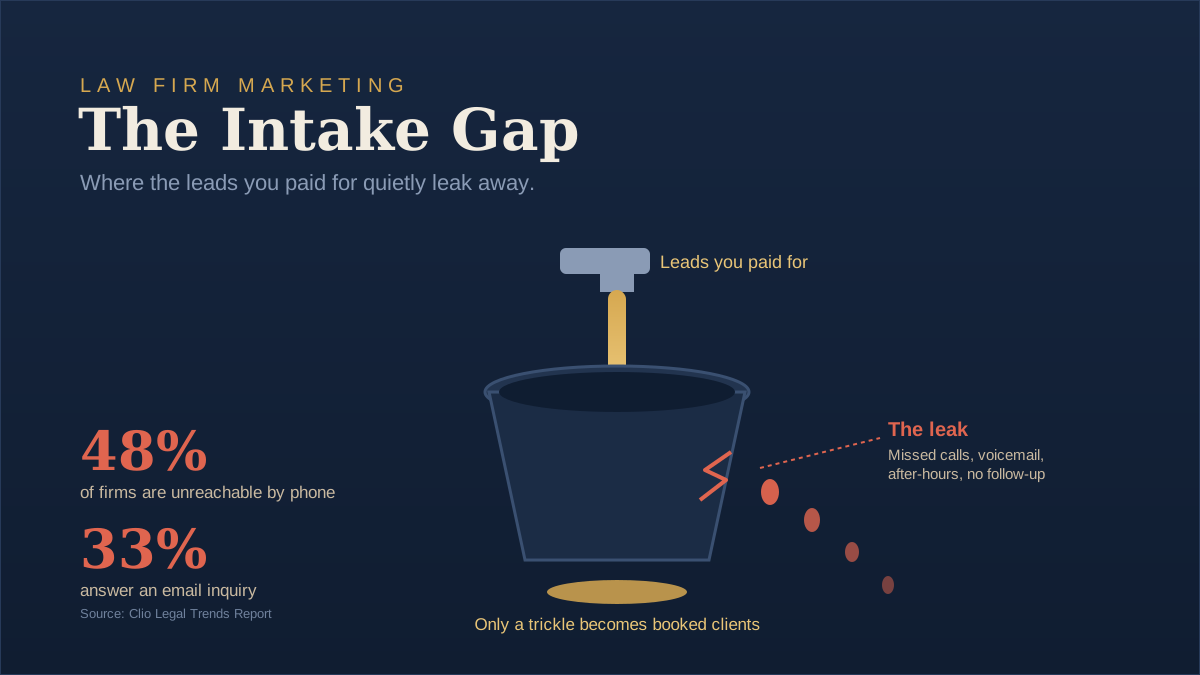
Most law firm marketing fails at intake, not leads. See how the Intake Gap quietly loses clients and the simple AI fix that catches every call.
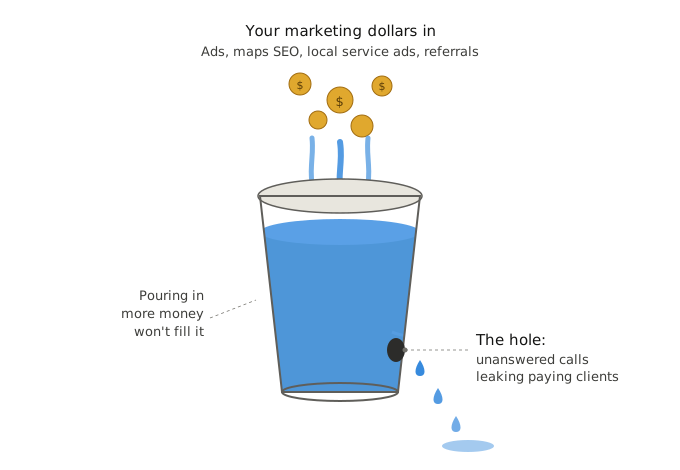
Diagram of how to stop missing calls in a business with an after-hours AI receptionist workflow
IMAG
By Albert Quintero May 31, 2026
Stop missing calls in your business and losing paying clients. See how AI receptionists answer every call 24/7 and book leads automatically.