AI SEO Explained: SEO vs AEO vs GEO and How to Get Found in 2026

Albert Quintero • June 14, 2026

About 60% of searches now end without a click. Here is how to stay visible across Google and the AI engines that are replacing it.

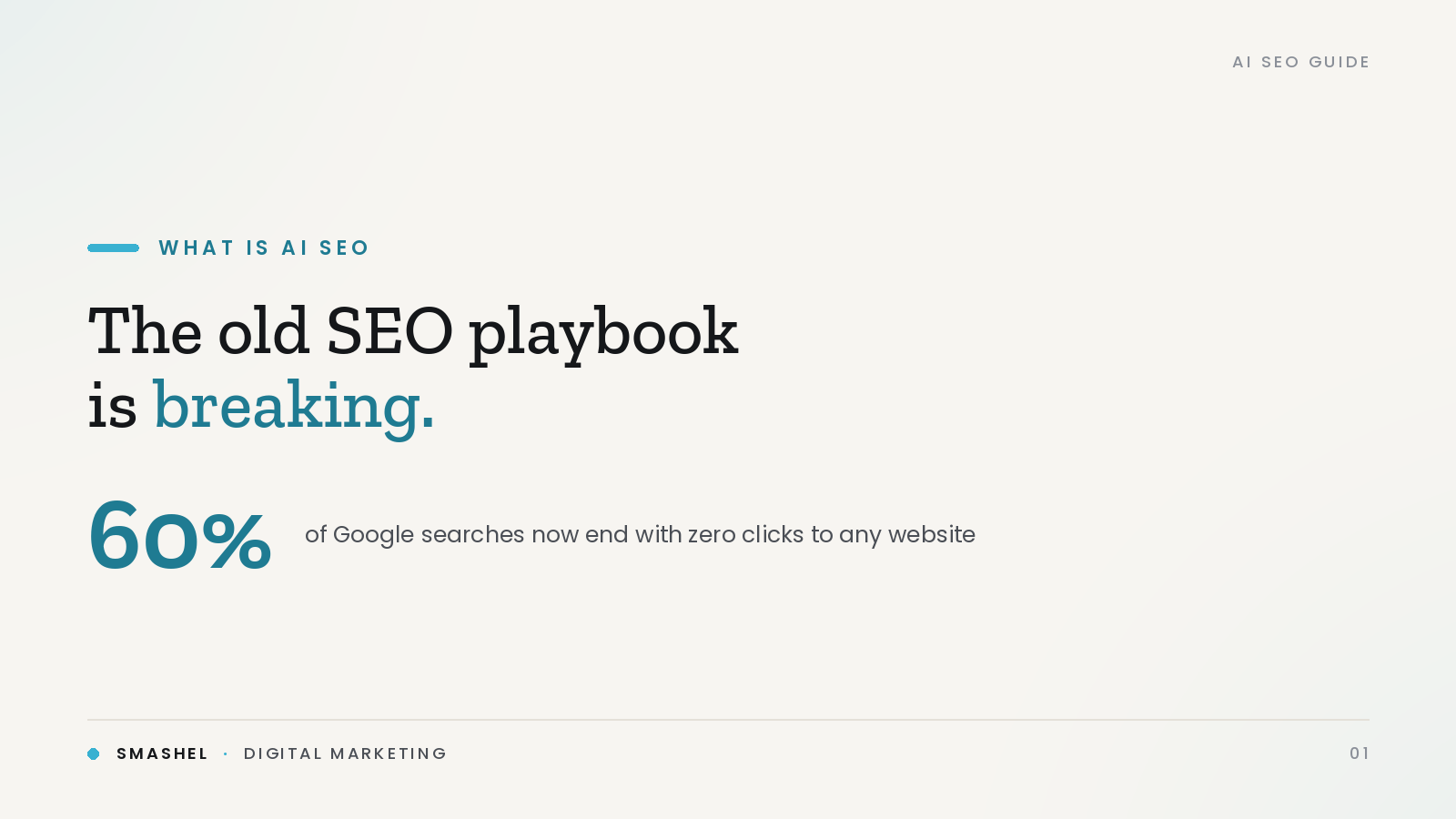
There is a shift happening in search, and most business owners will not notice it until their traffic falls off a cliff. About 60% of Google searches now end without a single click to any website. People type a question, get the answer right there on the screen, and never visit anyone.

If your entire plan is ranking on Google, you are optimizing for a door that is slowly closing. AI SEO is the wider game now, and it has three moving parts: SEO, AEO, and GEO. Know only the first one and you are already behind.

This guide breaks down what each one means, how they work under the hood, and where to focus so your business keeps showing up as search moves to AI.

What Is AI SEO, and Why the Old Playbook Is Breaking

AI SEO is the practice of getting found across every place people now search, not just the classic blue links on Google. That includes Google's own results, the AI answer engines like ChatGPT and Perplexity, and the AI-generated summaries that now sit at the top of Google itself.

The old model assumed one thing: rank a page, earn a click, get a visitor. That assumption is breaking. When AI answers the question on the page, there is often no click left to earn.

The numbers behind the shift are hard to ignore:

  • Roughly 60% of Google searches end with zero clicks to any site.
  • In Google's newer AI Mode, about 93% of searches end without a click, according to Semrush.
  • ChatGPT now serves over 900 million weekly users and has passed a billion monthly users, processing more than 2 billion queries a day.
  • Google's Gemini app has crossed 750 million monthly users, and Google's AI Overviews reach around 2 billion people a month.

Gartner has projected that traditional search volume could fall 25% by 2026 as AI becomes a substitute answer engine. Worth being honest here: that is a scenario forecast, not a settled fact. But you do not need the forecast to be exact to see the direction of travel.

The takeaway is simple. Search is splitting into three lanes, and each one is won differently.

SEO: Optimizing the Whole Search Results Page

Most people think SEO means one thing: ranking in the organic results. In 2026, that view is too narrow.

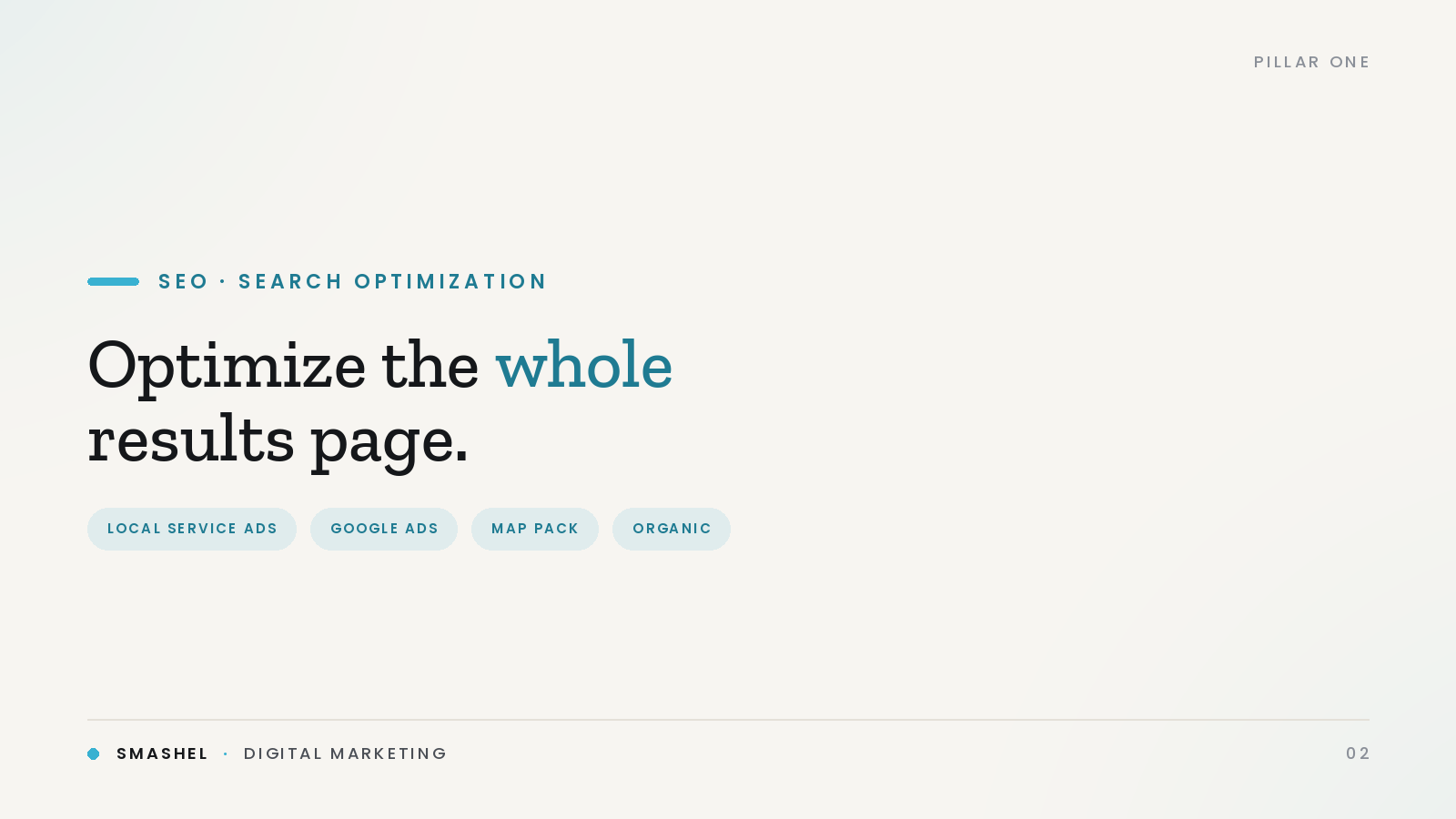
Pull up a real search, say 'DUI attorney in Dallas, Texas,' and look at the page. There are four distinct zones competing for attention:


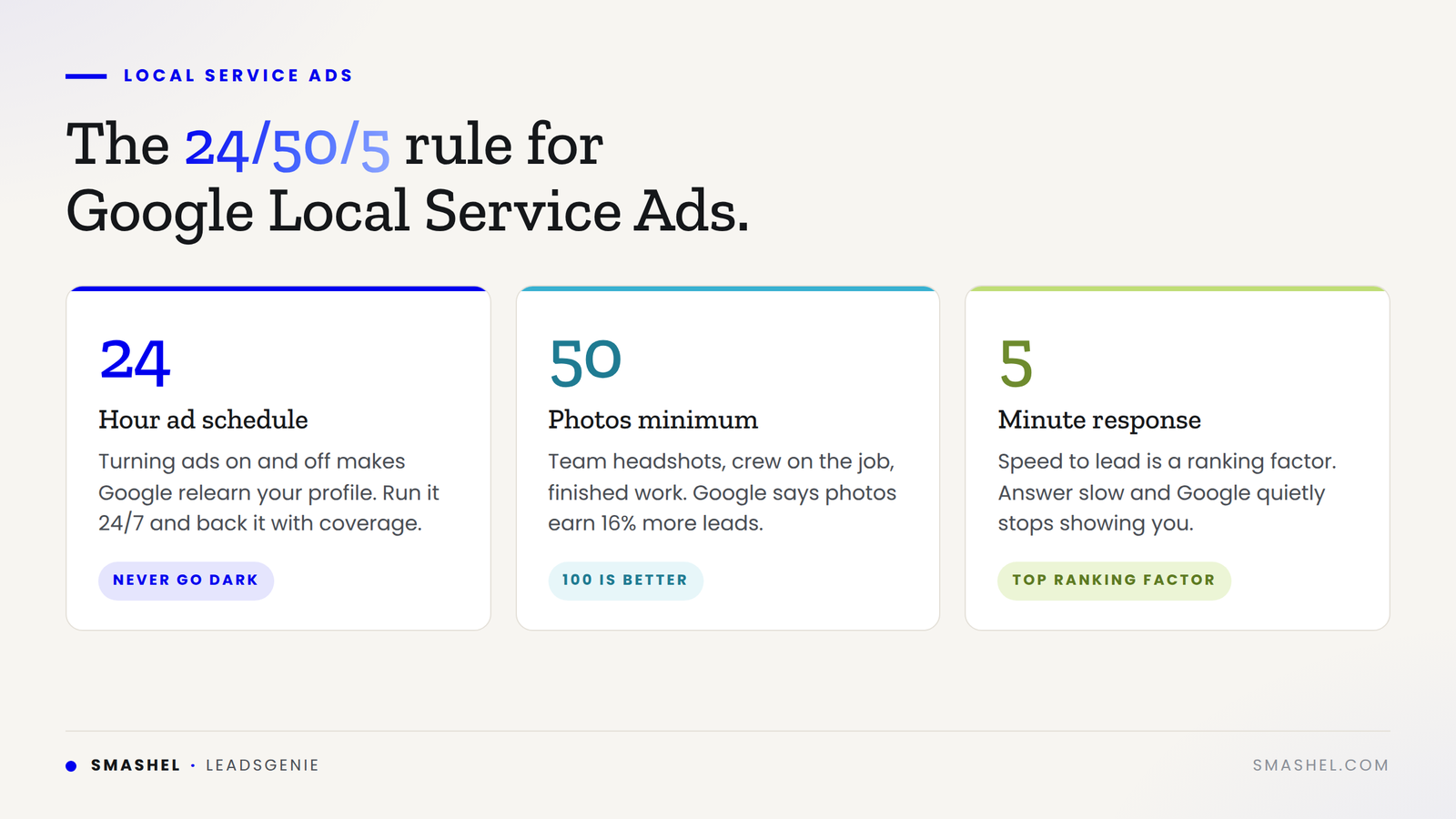
  • Local service ads (LSA), the pay-per-lead ads that used to be called Google Guaranteed.
  • Google Ads, the sponsored text results above and below everything else.
  • The map pack, the local results tied to Google Business Profiles. This is local SEO.
  • The organic results, which used to be a clean list of 10 links and now share the page with everything above.

Treating SEO as 'organic only' leaves most of that page on the table. The smarter approach is omnipresence: show up in as many of those zones as make sense for your business, so a searcher keeps seeing you no matter where their eye lands. That is the foundation the AEO and GEO layers build on top of.

AEO: Answer Engine Optimization

AEO is about being the single answer an AI assistant reads back when someone asks a question inside the tool. Answer engines include ChatGPT, Gemini, Claude, and Perplexity. You type a query, the tool pulls from sources it trusts, and it hands you one synthesized answer.

The term answer engine optimization was coined back in 2018 by Jason Barnard, originally for voice assistants and Google's featured snippets. The core idea has held up well.

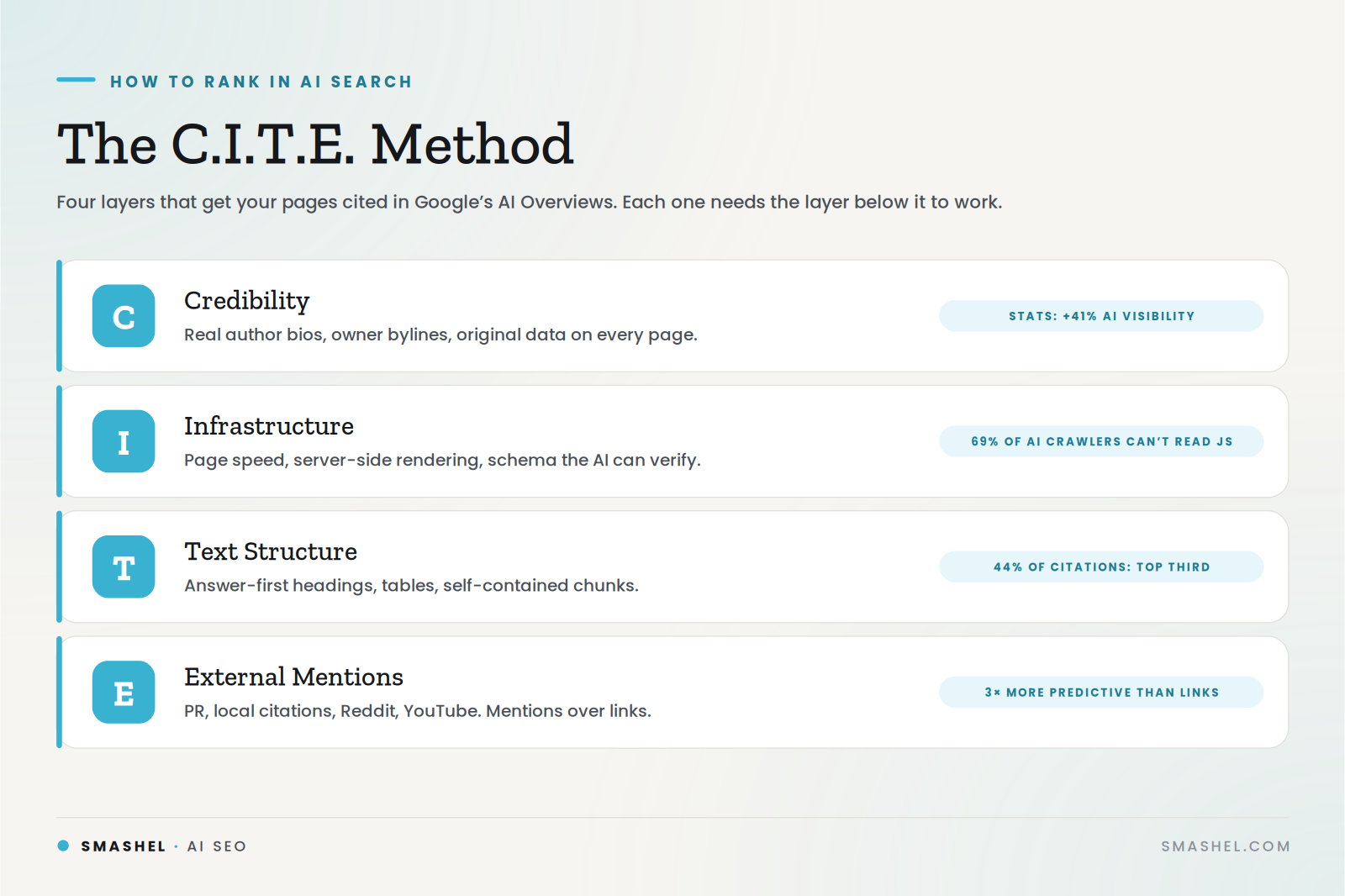
Answer engines reward content that is easy to lift out cleanly:

  • Lead with the answer. Put a direct, 40 to 50 word response right under a question-style heading, before the long explanation.
  • Format for extraction. Clear headings, FAQ blocks, and step lists give the engine something clean to grab.
  • Earn trust signals. Faster pages and recognized authority make a source easier for the engine to pick.

AEO matters most for informational and research questions, where someone wants to understand something rather than find a local business to hire.

GEO: Generative Engine Optimization

GEO is the newest lane, and it is the one most people get wrong. It is the practice of getting your content cited inside an AI-generated answer, like the AI Overview that now appears at the top of many Google searches.

Search 'how much does a DUI lawyer cost' and you will often see Google pull from roughly 10 different websites, blend them, and write its own summary with citations. GEO is the work of making your page one of those cited sources.

Here is the part that surprises people. GEO is not just SEO with a new name. The mechanics are genuinely different.

How AI engines actually choose sources

Classic Google ranking leans on keywords and links. Generative engines use a method called retrieval-augmented generation, or RAG. They turn your content into a mathematical representation, retrieve passages by meaning rather than exact keywords, re-rank them, then write an answer and attach citations.

That difference is why old tactics backfire. In a Princeton-led study published at a major academic conference (ACM KDD 2024), researchers tested nine optimization methods and found that keyword stuffing performed worse than doing nothing at all. It is the cleanest proof that GEO is not SEO.

What did work in that same research:

  • Adding relevant statistics and citing sources boosted a page's visibility in AI answers by up to about 40%.
  • The lift was largest for underdog sites. One method produced a 115% visibility gain for a page sitting in position five, while some already-dominant pages actually lost ground.

In other words, GEO can level the field for smaller brands in a way classic SEO rarely does.

Ranking on Google no longer guarantees AI visibility

This is the trap. You can rank well on Google and still be invisible inside AI answers. One analysis found that only about 12% of the URLs cited by AI tools rank in Google's top 10 for the same query. The two systems are pulling from different places.

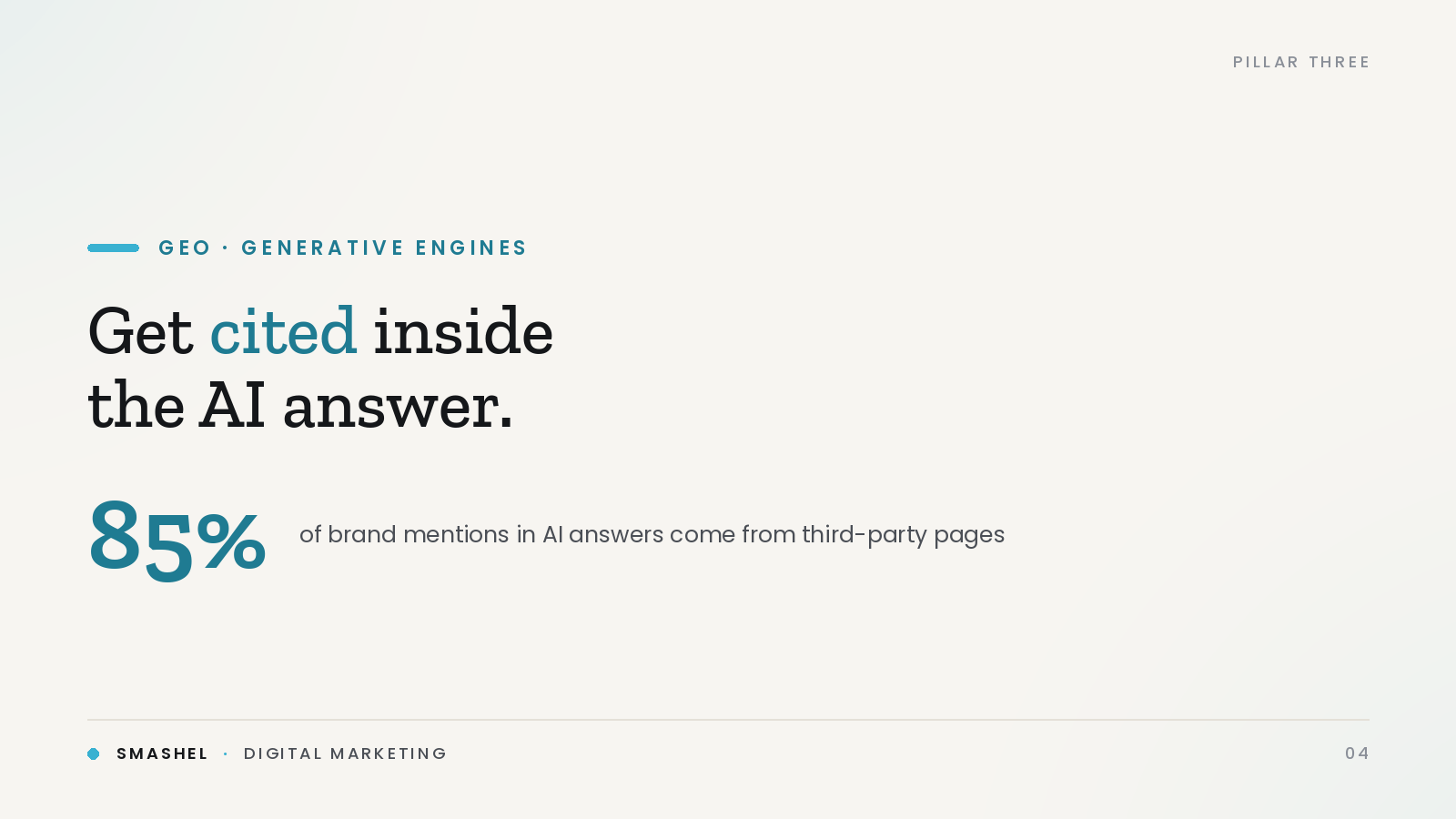
Even more telling: roughly 85% of brand mentions in AI answers come from third-party pages, not the brand's own website. Reddit, YouTube, and Wikipedia show up constantly. For two decades, SEO doctrine was 'own your content.' Generative engine optimization flips that. Your presence on other people's platforms now matters as much as your own pages.

The Payoff: Small AI Traffic, Big Value

Here is the part that should change how you think about all of this. AI referral traffic is still tiny, somewhere around 1% of total site visits for most businesses. So why bother?

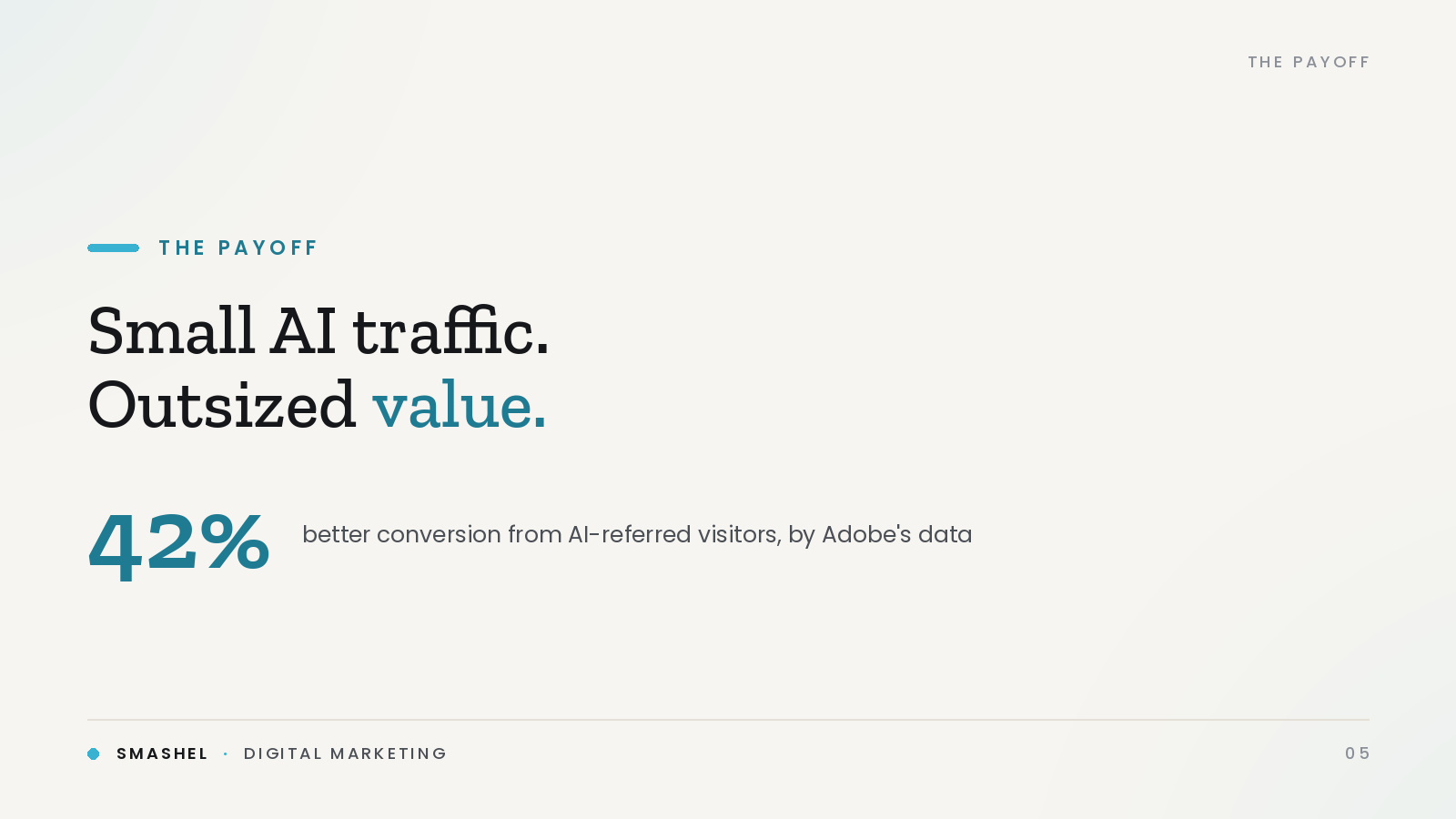
Because the trickle that does come through tends to convert. Adobe found AI-referred shoppers converted about 42% better than other traffic, and several studies show AI visitors subscribing at four to five times the rate of regular search visitors.

One caveat, because it keeps this honest. A peer-reviewed e-commerce study covering hundreds of sites and around $20 billion in orders found ChatGPT referrals actually converting worse than organic search. The pattern seems to depend on what you sell. The premium shows up in high-consideration, research-heavy purchases, less so in impulse buys.

The real-world examples make it concrete:

  • Vercel grew ChatGPT-driven signups from under 1% to 10% in six months by making its docs easy for AI crawlers to read and keeping them fresh.
  • On the losing side, Chegg's non-subscriber traffic fell 49% and Business Insider's organic search traffic dropped 55%, both pressured by AI answers absorbing the clicks they used to get.

The redistribution is already happening. It rewards the brands that show up in AI answers and punishes the ones that assumed Google would always send the traffic.

How to Apply AI SEO to Your Business

You do not need to do everything at once. Here is a practical order of operations.

  1. Cover the whole search page first. Make sure your organic pages, Google Business Profile, and any paid placements are working together. This is your AI search optimization foundation.
  2. Write answer-first content. Open each key page or section with a direct answer to the exact question someone would ask, then expand. This serves AEO and GEO at the same time.
  3. Back claims with data and sources. Specific statistics and cited references are what lift you inside AI answers. Vague, fluffy copy gets skipped.
  4. Build presence off your own site. Be genuinely helpful where AI engines look: Reddit threads, YouTube, industry forums, and comparison content like 'best X' and 'X alternatives.'
  5. Keep content fresh. Citation rates are highest within about seven days of publishing or updating a page. A once-a-quarter refresh is no longer enough.
  6. Serve readable HTML. If your content only renders through heavy JavaScript, AI crawlers may never see it. Make the important text easy to read on the raw page.

That list is also a decent answer to 'how to use AI for SEO' without handing the whole strategy to a tool. The tools help. The strategy is yours.

Frequently Asked Questions

  • Will AI replace SEO?

    No, but it is changing what SEO means. Classic ranking still matters, and it now sits alongside AEO and GEO. The future of SEO is broader, not dead.

  • What is the difference between SEO, AEO, and GEO?

    SEO is about ranking pages so people click them. AEO is about being the single answer an assistant like ChatGPT reads back. GEO is about being cited as a source inside an AI-generated summary. Same goal, three different mechanics.

  • Is AI-generated content good for SEO?

    It can be, if it is accurate, genuinely useful, and edited by a human. The engines reward depth, clarity, and trustworthy sourcing. They tend to ignore thin or duplicate content no matter who or what wrote it.

  • How do I show up in Google AI Overviews?

    Publish clear, answer-first content backed by real data and citations, keep it current, and build mentions on third-party sites the engines already trust. Ranking on Google helps but does not guarantee it, since AI Overviews often cite sources that do not rank in the top results.

  • Do I need AI SEO services, or can I do it myself?

    You can absolutely start on your own using the steps above. Most businesses bring in help once they want to move faster or compete in a crowded market. If you would rather hand it off, that is exactly what our AI SEO services are built for.

Watch the Full Breakdown

The video above walks through all three lanes with live searches, so you can see exactly what each one looks like on screen. If you want a partner to put this into motion for your business, that is what we do every day. Take a look, then reach out when you are ready to show up everywhere your customers are searching.

 book)How a flow-based AI receptionist is built
By Albert Quintero June 11, 2026
An AI receptionist for a law firm can book cases 24/7 or create liability. Here's how flow-based agents answer every call and only ever say what's true.
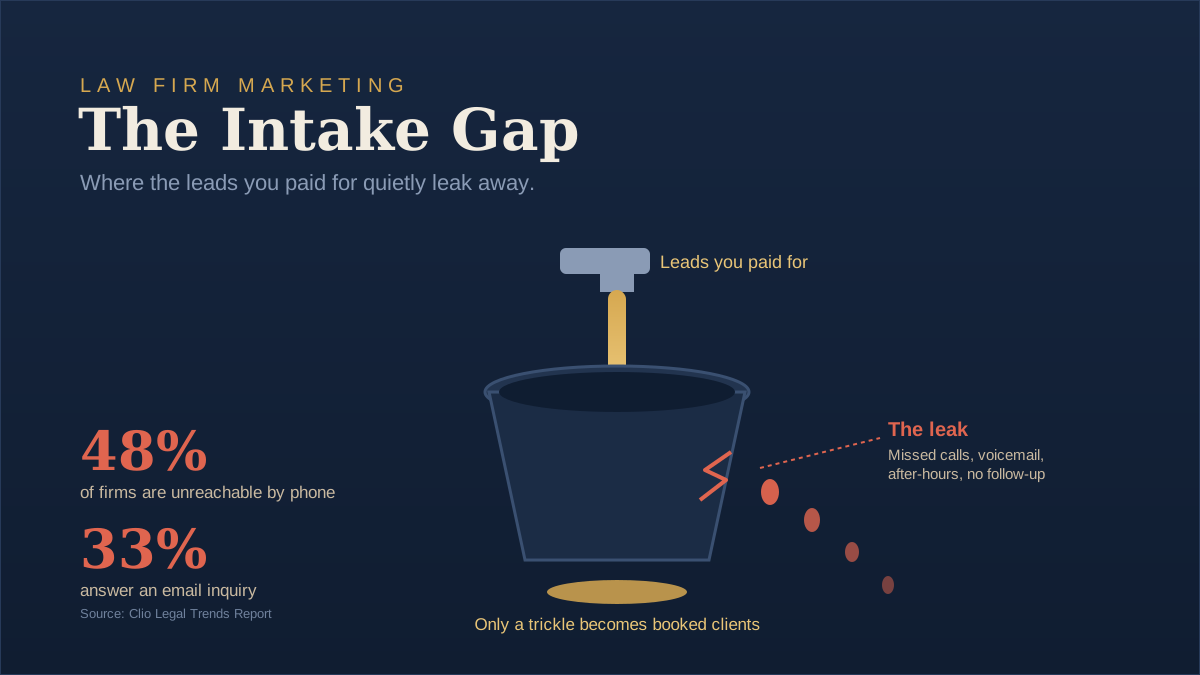
Law firm marketing funnel showing paid leads leaking out through the intake gap
By Albert Quintero June 6, 2026
Most law firm marketing fails at intake, not leads. See how the Intake Gap quietly loses clients and the simple AI fix that catches every call.
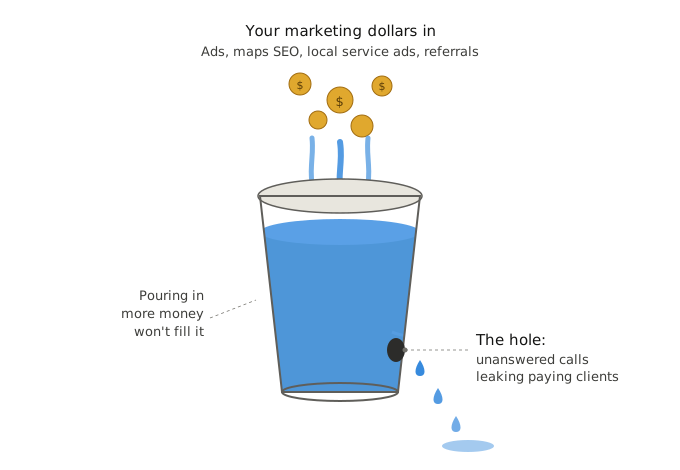
Diagram of how to stop missing calls in a business with an after-hours AI receptionist workflow
IMAG
By Albert Quintero May 31, 2026
Stop missing calls in your business and losing paying clients. See how AI receptionists answer every call 24/7 and book leads automatically.